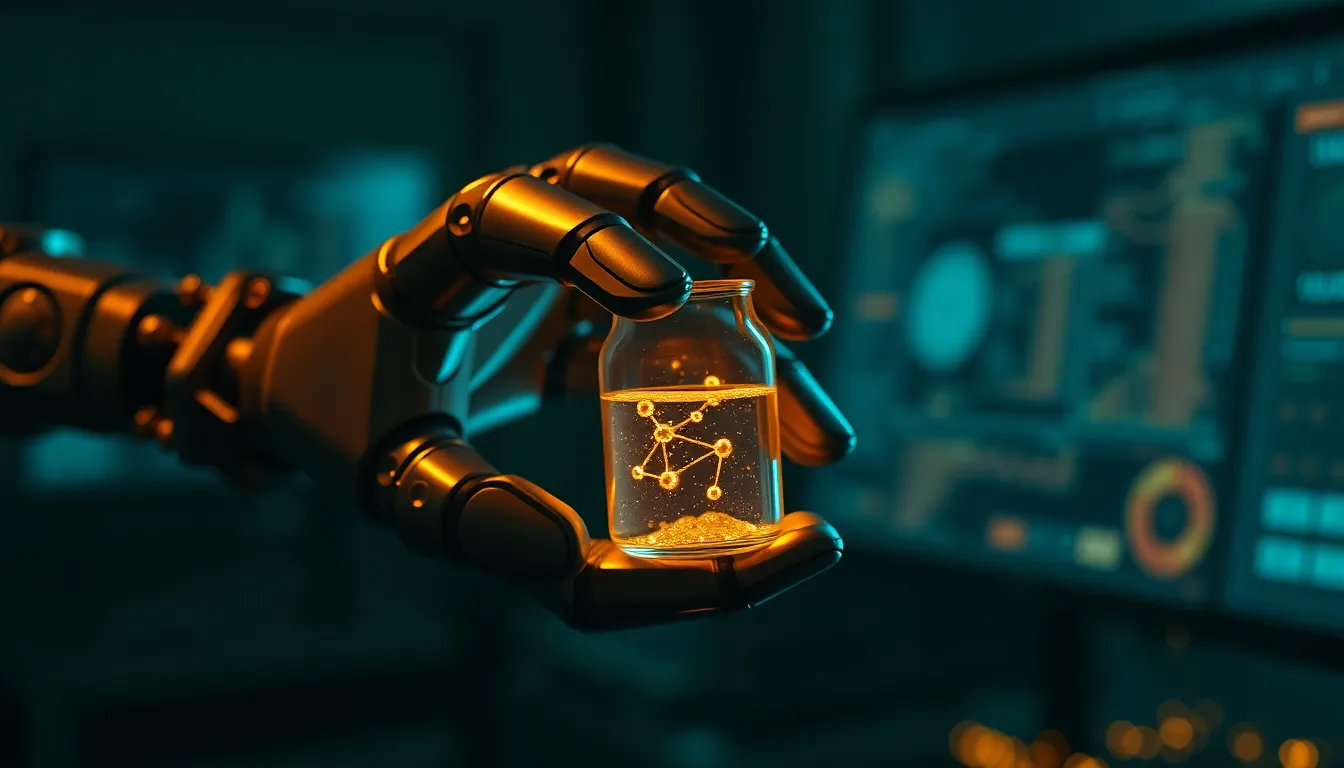
Drug discovery has always been a marathon - a grueling 10 to 15-year journey that costs billions and succeeds only a fraction of the time. For every medicine that reaches your pharmacy, thousands of candidate molecules fall away in labs, clinical trials, and regulatory review. But artificial intelligence is rewriting the rules. Today, AI platforms are compressing entire phases of discovery that once took years into timelines measured in days or months. We're not talking about incremental improvements. AI can now cut the entire drug development process down to as little as 1 to 2 years in some cases, a 70% reduction in timelines. That shift changes everything - for researchers hunting cures, for patients waiting for treatments, and for companies betting billions on the next breakthrough.
How AI Accelerates Every Stage of Drug Discovery
Traditional drug discovery follows a linear, painstaking path. First, scientists identify a biological target - usually a protein or gene involved in a disease. Then they screen millions of chemical compounds to find candidates that interact with that target. Next comes lead optimization, where chemists tweak molecular structures to improve efficacy and safety. After that, researchers test absorption, distribution, metabolism, excretion, and toxicity (ADMET profiling) before any human trials begin. Each stage historically required months or years of lab work, trial and error, and iterative testing.
AI collapses these stages by handling the combinatorial explosion of possibilities. Machine learning models trained on vast chemical databases can screen millions of compounds in days instead of the months required for physical lab screening. They predict which molecules will bind to a target, how they'll behave in the body, and which structural modifications will improve performance. Insilico Medicine demonstrated this in a striking example: the company identified a novel target for idiopathic pulmonary fibrosis and advanced a drug candidate into preclinical trials in just 18 months. That same process typically takes 4 to 6 years using conventional methods. The AI didn't just speed up one step - it accelerated target identification, compound generation, and validation simultaneously.
The technology works across nearly every phase of the pipeline. During target identification, AI analyzes genomic data, protein structures, and disease pathways to pinpoint which biological mechanisms matter most. In lead optimization, generative models propose new molecular structures with desired properties, then predict their behavior before synthesis. ADMET profiling uses neural networks trained on toxicity and pharmacokinetic data to flag problem candidates early, saving the cost and time of testing dead ends. By 2026, most major pharmaceutical companies and biotech startups have embedded AI into their discovery workflows, treating it as infrastructure rather than experiment.
Clinical Trials Get Faster and Smarter
Discovery is only half the story. Clinical trials - the phase where experimental drugs are tested in humans - represent the longest, most expensive, and riskiest part of development. A single Phase III trial can cost hundreds of millions of dollars and take years to complete. Patient recruitment alone often stalls trials for months, as researchers struggle to find eligible participants who meet narrow inclusion criteria. Many trials fail not because the drug doesn't work, but because the trial design was flawed or the patient cohort was poorly matched.
AI is changing this too. Artificial intelligence can accelerate clinical trial timelines by 30-50% by optimizing trial design, improving patient recruitment, and identifying eligible participants faster. Natural language processing models scan electronic health records to match patients with trials in real time, drastically cutting recruitment delays. Predictive algorithms simulate trial outcomes under different protocol designs, helping researchers choose the most efficient path before enrolling a single patient. Some platforms use AI to monitor trial data continuously, spotting adverse events or efficacy signals earlier than traditional interim analyses would allow.
The result is not just speed but higher success rates. Trials designed with AI input are more likely to enroll the right patients, use appropriate dosing, and detect meaningful outcomes. That means fewer expensive failures in late-stage development and more drugs reaching approval. For patients with rare or aggressive diseases, a 30-50% reduction in trial timelines can translate directly into years of additional life - time that matters more than any efficiency metric on a spreadsheet.
Real-World Impact: From Labs to Medicine Cabinets
The numbers sound impressive in isolation, but what does this look like in practice? Consider a biotech startup working on a treatment for a rare genetic disorder. Traditionally, they'd spend two to three years identifying a target, another two years screening compounds, and several more optimizing a lead candidate - all before a single human trial begins. With AI, that timeline shrinks dramatically. The company can generate and test thousands of virtual candidates in weeks, prioritize the most promising for synthesis, and move into animal studies within months instead of years. The financial implications are profound: lower development costs mean smaller biotechs can compete, rare diseases become economically viable to research, and investors can fund more shots on goal with the same capital.
Larger pharmaceutical companies are using AI differently but with equal impact. They apply machine learning to massive internal compound libraries, resurrecting shelved candidates that might work for new indications. They use AI to predict drug-drug interactions and design combination therapies. Some are building closed-loop systems where AI designs a molecule, robotic labs synthesize and test it, and the results feed back into the model - a continuous cycle that operates with minimal human intervention. These systems don't replace scientists; they free researchers to focus on interpretation, strategy, and the creative leaps that machines still can't make.
We're also seeing AI tackle problems that were previously intractable. Protein folding, once a computational nightmare, was revolutionized by tools like AlphaFold, which predict 3D protein structures with near-experimental accuracy. That enables structure-based drug design at scale, opening up previously "undruggable" targets. Generative models are designing entirely novel molecular scaffolds that don't exist in nature or existing chemical libraries, expanding the universe of possible medicines. And AI is helping researchers understand disease mechanisms at a systems level, connecting dots across genomics, proteomics, and metabolomics in ways that individual human researchers could never synthesize.
The Limits We're Still Pushing
AI isn't a silver bullet, and the technology still faces real constraints. Machine learning models are only as good as their training data, and much of the historical data in drug discovery is biased, incomplete, or poorly annotated. Models can hallucinate plausible-sounding molecules that turn out to be toxic or impossible to synthesize. Regulatory agencies are still developing frameworks for how to evaluate AI-designed drugs, and questions remain about explainability - can a company explain why an AI chose a particular molecule if the model's reasoning is opaque?
There's also the biological complexity that no algorithm fully captures. Human biology is messy, full of context-dependent interactions, genetic variation, and emergent phenomena that don't reduce neatly to patterns in data. A drug that works beautifully in silico or in animal models can still fail in humans for reasons we don't yet understand. AI accelerates hypothesis generation and testing, but it doesn't eliminate the need for rigorous empirical validation. The best results come when AI and human expertise work in tandem - machines generating possibilities, humans judging plausibility and navigating the nuances that data alone doesn't reveal.
And then there's the access question. The most sophisticated AI drug discovery platforms require significant computational resources, specialized talent, and large proprietary datasets. That concentrates power in the hands of well-funded companies and raises questions about equity. Will AI-driven drug discovery primarily benefit wealthy markets and common diseases, leaving rare diseases and low-income populations behind? Or can we build systems that democratize access and direct these tools toward the greatest medical need rather than the largest financial return?
Conclusion
We're living through a fundamental shift in how medicines are made. What took a decade and billions of dollars five years ago can now happen in a fraction of the time at a fraction of the cost. AI has moved from experimental novelty to core infrastructure in drug discovery, and the results are starting to show up in clinics. Drugs designed with AI assistance are entering human trials, and the first AI-discovered medicines are approaching regulatory approval. This isn't science fiction or distant future speculation - it's happening now, and the pace is accelerating.
The bigger story is what this enables. Faster, cheaper drug discovery means we can tackle diseases that were previously too rare or too difficult to justify the investment. It means patients wait years less for treatments, and researchers can test more ideas with the same resources. It means the pharmaceutical industry's notorious failure rate starts to improve, making the entire ecosystem more sustainable. AI won't solve every problem in medicine, but it's compressing the timeline between scientific insight and human benefit in ways that would have been impossible just a few years ago. That compression - from years to days in many discovery tasks - is reshaping what's possible in human health.
FAQs
How much faster is AI-driven drug discovery compared to traditional methods?
AI can compress the entire drug discovery process from the traditional 10 to 15 years down to as little as 1 to 2 years in some cases, representing up to a 70% reduction in timelines. Individual stages like compound screening can be reduced from months to days, and processes like target identification and lead optimization can be shortened from 4 to 6 years to around 18 months, as demonstrated by companies like Insilico Medicine.
What parts of drug discovery does AI actually help with?
AI is applied across almost every stage of the drug discovery pipeline. This includes target identification (finding disease-relevant proteins or genes), compound screening (testing millions of molecules virtually), lead optimization (improving drug candidates), ADMET profiling (predicting how drugs behave in the body), and clinical trial design. AI also helps with patient recruitment, trial monitoring, and predicting which drug candidates are most likely to succeed in human testing.
Can AI really design new drugs on its own?
AI can generate novel drug candidates and predict their properties, but it doesn't work in isolation. Generative models can propose new molecular structures that have never been synthesized before, and machine learning can predict their activity, toxicity, and pharmacokinetics. However, these predictions still require experimental validation in labs and clinical trials. The most effective approach combines AI's ability to explore vast chemical spaces with human expertise in interpreting results and making strategic decisions.
How does AI speed up clinical trials specifically?
Artificial intelligence can accelerate clinical trial timelines by 30-50% through several mechanisms. AI analyzes electronic health records to identify and recruit eligible patients faster, designs more efficient trial protocols by simulating different scenarios, and monitors trial data in real time to detect safety issues or efficacy signals earlier. These improvements reduce recruitment delays, lower the risk of trial failure due to poor design, and help researchers make faster decisions about whether to continue, modify, or stop a trial.
Are AI-discovered drugs already being used by patients?
As of 2026, several AI-discovered drugs are in clinical trials, and some are approaching regulatory approval, but most haven't reached widespread patient use yet. The first wave of AI-assisted drugs is moving through the pipeline, with some candidates that were identified or optimized using AI now in Phase II and Phase III trials. Given that it typically takes years for a drug to move from discovery through approval, we're likely to see the first AI-discovered drugs reach pharmacy shelves in the next few years, with the number growing steadily after that.