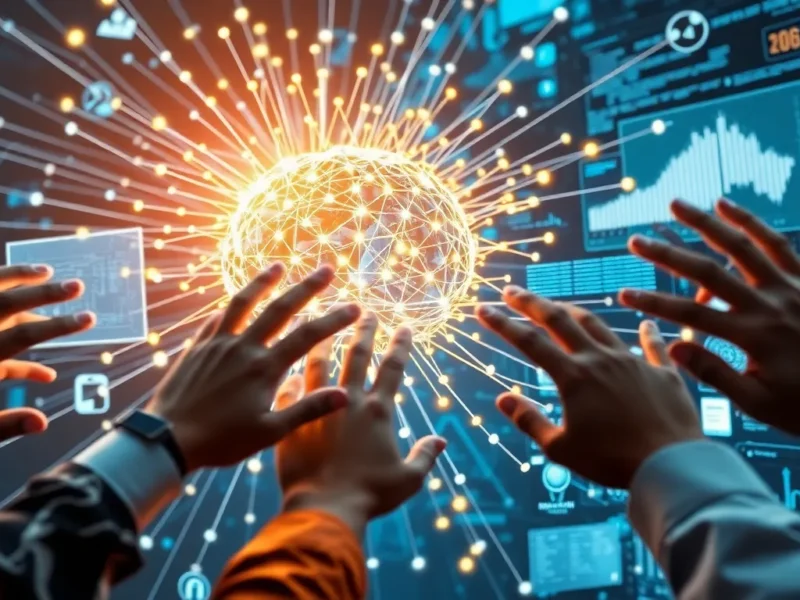
The human brain generates electrical signals every second, and scientists have been trying to decode them for decades. Now, machine learning is turning that dream into reality. Brain-Computer Interfaces, or BCIs, once limited by noisy data and slow response times, are rapidly becoming smarter and more intuitive thanks to advances in artificial intelligence. We're not just talking about lab experiments anymore. Paralyzed patients are controlling robotic limbs with their thoughts, and researchers are decoding mental states in real time. This convergence of neuroscience and AI is creating systems that adapt to individual brain patterns, filter out noise, and respond almost instantly to human intention.
How Machine Learning Makes Brain Signals Usable
Raw brain signals are messy. When you record electrical activity from the brain using electroencephalography or EEG, you don't just get pure neural data. You get muscle twitches, eye movements, electrical interference from nearby devices, and other artifacts that muddy the picture. Traditional signal processing methods struggled to separate the wheat from the chaff, making BCIs unreliable outside controlled lab settings.
Deep learning changed that equation. Modern neural networks can learn what true brain activity looks like versus what's just noise. They analyze thousands of samples, building sophisticated models that recognize patterns humans would miss. These models become filters that clean the data stream in real time, extracting the meaningful signals buried in the electrical chaos.
The result? BCIs that work in everyday environments, not just pristine laboratories. A user can move around, blink normally, even talk, and the system still knows what their brain is trying to communicate. This wasn't possible five years ago. Machine learning algorithms have gotten so good at noise reduction that researchers are achieving accuracy rates that would have seemed impossible with older statistical methods.
What makes this particularly powerful is personalization. Your brain doesn't produce exactly the same signals as mine, even when we're thinking similar thoughts. Machine learning systems adapt to each user's unique neural fingerprint. They learn your specific patterns over time, becoming more accurate the longer you use them. It's like the system gets to know your brain personally.
Real-Time Decoding of Mental States
Machine learning doesn't just clean signals. It interprets them. Modern Brain-Computer Interfaces can detect when you're focused versus distracted, stressed versus calm, mentally overloaded versus coasting. They read patterns in your brain activity that correlate with specific cognitive and emotional states, then respond accordingly.
This happens fast enough to matter. We're talking milliseconds, not minutes. An AI-powered BCI can detect that your attention is wavering during a task and adjust the difficulty level before you consciously realize you're struggling. It can sense mounting stress and trigger an alert or recommend a break. These systems monitor mental workload continuously, providing feedback that helps users optimize their cognitive performance.
The technology relies on pattern recognition at scale. Machine learning models train on massive datasets of labeled brain activity, learning which signal patterns correspond to which mental states. They identify features in the frequency domain, spatial patterns across different brain regions, and temporal sequences that unfold over fractions of a second. Humans can't spot these patterns reliably, but trained neural networks excel at it.
Gaming companies are already exploring this. Imagine a video game that reads your engagement level and adjusts its pacing to keep you in the flow state. Educational software could detect when a student is confused and automatically provide additional explanation. The military is testing systems that monitor pilot cognitive load to prevent dangerous levels of mental fatigue during complex missions. These aren't future concepts. Prototypes exist right now.
Clinical Breakthroughs Powered by Smart BCIs
The most profound impact is happening in medicine. Machine learning has enabled BCIs to achieve what advocates have promised for years: giving paralyzed patients new ways to interact with the world. People with locked-in syndrome, unable to move or speak, are typing messages by thinking about letters. Others are controlling robotic arms to feed themselves or shake hands with loved ones. These aren't crude, jerky movements. The control is smooth and intuitive because machine learning interprets neural commands accurately.
In 2019, researchers at Carnegie Mellon University demonstrated a noninvasive BCI that let people control a virtual object continuously using only their thoughts. Previous noninvasive systems required invasive surgery or offered limited, jerky control. This one, powered by deep learning, achieved performance that matched invasive alternatives. Users could guide a virtual cursor smoothly across a screen, navigating complex paths without physical input. The AI decoded their intentions from messy EEG signals captured through the scalp.
That same year marked a turning point. Multiple research groups published results showing that machine learning could bridge the gap between noninvasive recording and practical control. The algorithms learned to compensate for the low signal quality inherent in reading brain activity through skull and skin. They extracted enough information to enable real-time, continuous control that felt natural to users.
Clinical trials are expanding. Patients with amyotrophic lateral sclerosis, spinal cord injuries, and stroke-related paralysis are testing BCI systems at home, not just in research labs. The machine learning components make these systems practical. They reduce calibration time, adapt to daily variations in signal quality, and maintain accuracy over weeks and months of use. Earlier BCIs required extensive retraining every session. Modern AI-powered versions learn your patterns once and remember them.
Speed, Accuracy, and the Path Forward
Speed matters enormously in BCI applications. If there's a noticeable lag between thinking about moving a cursor and seeing it move, the system feels broken. Your brain expects immediate feedback. Machine learning has dramatically reduced latency by optimizing every step of the signal processing pipeline. Modern systems decode intentions and execute commands in 50 to 100 milliseconds, fast enough that users perceive it as instantaneous.
Accuracy has improved just as much. Early BCIs were lucky to achieve 70 percent accuracy, meaning three out of ten commands were wrong. That's frustrating and exhausting. Current systems routinely exceed 90 percent, with some reaching 95 percent or higher for trained users. Machine learning made this leap possible by finding subtle patterns in brain signals that traditional algorithms missed.
The technology keeps improving. Researchers are experimenting with transformer architectures, the same AI models that power modern language systems, to decode neural activity. These models excel at finding relationships in sequential data, which brain signals definitely are. Early results suggest they can extract even more information from the same raw data, pushing accuracy higher while reducing the number of electrodes needed.
We're also seeing hybrid approaches that combine different types of brain signals. Some systems use EEG for speed and functional near-infrared spectroscopy for spatial precision, with machine learning fusing the two data streams into a richer picture of brain activity. Others blend neural signals with subtle muscle activity or eye tracking, letting the AI use every available cue to infer user intent.
Cost is dropping too. As algorithms become more efficient, they require less computing power. That means BCI systems can run on ordinary laptops or even smartphones instead of expensive workstations. Machine learning is also reducing the need for custom hardware. Better algorithms can extract usable signals from cheaper sensors, making the technology accessible beyond research institutions.
Conclusion
Brain-Computer Interfaces have moved from science fiction to working technology, and machine learning deserves most of the credit. By learning to separate signal from noise, decode complex patterns, and adapt to individual users, AI has solved problems that stalled BCI development for decades. We're seeing paralyzed patients regain agency, researchers decode mental states in real time, and systems that respond to thought as naturally as we respond to touch. The technology still has limitations. It's not telepathy, and it won't read your deepest secrets. But it's becoming practical enough for real applications outside the lab. As algorithms continue improving and costs keep falling, BCIs will move from medical necessity to mainstream tool. The barrier between mind and machine is thinning, one neural pattern at a time.
FAQs
What exactly is a Brain-Computer Interface?
A Brain-Computer Interface is a system that reads electrical signals from your brain and translates them into commands for external devices. It creates a direct communication pathway between neural activity and computers, allowing control through thought alone without requiring muscle movement. Most BCIs use sensors placed on the scalp or implanted in the brain to detect these signals.
How does machine learning improve BCI accuracy?
Machine learning algorithms learn to recognize patterns in brain activity that correspond to specific intentions or mental states. They filter out noise, adapt to individual users' unique neural signatures, and find subtle signal features that traditional methods miss. Over time, these systems become more accurate as they gather more data about how your specific brain generates signals.
Are Brain-Computer Interfaces safe to use?
Noninvasive BCIs that use scalp electrodes are very safe with no significant risks beyond minor skin irritation. Invasive BCIs that require brain surgery carry surgical risks like any operation, but they're used primarily for patients with severe paralysis where benefits outweigh risks. The machine learning components themselves don't affect safety, they just process the signals.
Can BCIs read my thoughts or memories?
No. Current BCIs detect general patterns related to attention, intention to move, or mental state, not specific thoughts or memories. They can tell when you're thinking about moving your hand, but not what you had for breakfast or what you're planning tomorrow. The technology reads broad neural patterns, not detailed semantic content.
When will BCIs be available for everyday consumers?
Simple consumer BCIs for gaming and meditation already exist, though they're limited compared to research systems. More sophisticated BCIs for communication and control are still primarily in clinical trials. As machine learning continues improving accuracy and reducing cost, we'll likely see more consumer applications within the next three to five years, especially for accessibility and wellness uses.