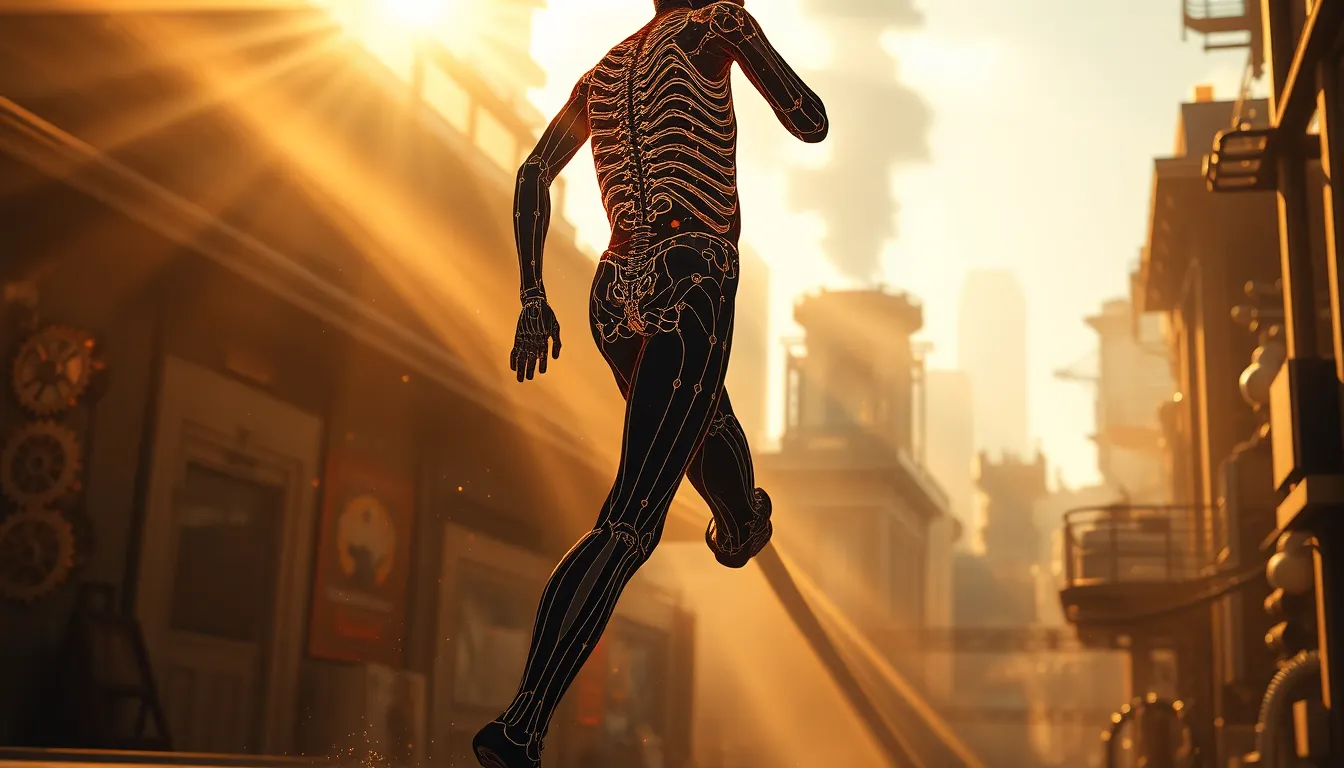
Motion capture used to mean actors in tight black suits covered in white ping-pong balls, surrounded by expensive camera rigs in specialized studios. That barrier kept the technology firmly in the hands of Hollywood blockbusters and big-budget game studios. Now AI has rewritten those rules entirely. Computer vision algorithms can track your movements from a simple video recording, analyzing joint positions and body mechanics without a single sensor strapped to your body. The same technology that helps your phone recognize faces can now map how you walk, jump, or dance in three-dimensional space.
This shift matters beyond convenience. When motion capture no longer requires specialized equipment that can cost upwards of $100,000, creators working in small studios, independent filmmakers, and even solo developers gain access to tools that were once completely out of reach. The AI doesn't just make the process cheaper - it fundamentally changes where and how motion capture happens.
How AI Reads Movement From Standard Video
The technology relies on deep learning models trained on massive datasets of human movement. These neural networks learn to identify body parts in video frames and estimate their positions in three-dimensional space. When you record someone moving, the AI examines each frame and predicts where joints like shoulders, elbows, knees, and hips exist relative to one another.
Microsoft's Kinect sensor in 2011 provided an early glimpse of this capability, using machine learning to estimate 3D joint positions for gaming applications. But the real transformation started around 2013 when deep learning became the dominant approach. Modern systems go far beyond those early experiments. They can work with footage from smartphones, webcams, or any standard camera - no depth sensors required.
The process happens in stages. First, the AI identifies the person in the frame and segments them from the background. Then it predicts a skeleton structure overlaid on the body, estimating joint locations frame by frame. Finally, it translates those 2D observations into 3D coordinates by understanding human anatomy and movement constraints. A knee can only bend certain ways. An arm has limited rotation angles. The AI uses these biological rules to make accurate 3D predictions even from a single camera angle.
Recent smartphone applications demonstrate just how precise this technology has become. Some systems now achieve tracking errors as low as 3 to 4 inches (8 to 10 centimeters) - accurate enough for animation reference, biomechanics analysis, and many professional applications. That margin of error sits in the range where the technology becomes genuinely useful rather than just a novelty.
What You Can Actually Do With It
Animation studios use markerless motion capture to create reference material without booking expensive mocap sessions. An animator can record themselves acting out a scene at their desk, then use that captured motion as a starting point for digital characters. The process doesn't replace traditional keyframe animation, but it speeds up the blocking phase and helps capture natural movement nuances that are hard to animate from scratch.
Physical therapists and sports scientists have found practical applications too. Recording an athlete's movement and generating biomechanical data reveals details about gait patterns, joint stress, and movement efficiency. A physical therapist can track a patient's recovery progress by comparing motion capture data over weeks or months, spotting improvements or compensations that might not be obvious to the naked eye.
Virtual production for film and television benefits from the portability. Directors can capture actor performances on location rather than requiring them to work in a studio surrounded by cameras and markers. The footage gets processed later, extracting the motion data and applying it to digital characters or effects. This workflow keeps actors in natural environments where their performances often feel more authentic.
Fitness and sports training applications let coaches analyze technique remotely. Record a golf swing, a tennis serve, or a running stride, and the AI breaks down the mechanics into measurable data. Coaches can then provide feedback based on joint angles, timing sequences, and movement patterns rather than just visual observation.
Where the Technology Still Falls Short
Markerless motion capture excels at full-body tracking but struggles with fine details. Facial micro-expressions, subtle finger movements, and precise hand gestures remain challenging. High-end marker-based systems still win when you need to capture an actor's face for realistic digital double work or when finger articulation matters for sign language or musical instrument performance.
The AI makes educated guesses based on probability and anatomical constraints, which means it can misread movements in certain situations. Loose clothing can obscure joint positions. Multiple people moving close together confuse tracking algorithms as bodies overlap. Fast, complex movements sometimes produce jittery or inaccurate results because the AI struggles to maintain consistent tracking between frames.
Lighting conditions matter more than you might expect. While these systems work with ordinary cameras, they still need sufficient lighting to identify body parts clearly. Recording in dim environments or with harsh shadows can degrade accuracy. Direct sunlight can create exposure problems that make tracking less reliable.
Camera angle and distance create limitations too. The AI needs to see enough of the body to make accurate predictions. Extreme close-ups, partial occlusions, or shots where the subject is very far from the camera all reduce tracking quality. Some systems require multiple camera angles to resolve ambiguities in depth perception, which adds complexity even though you're not using specialized equipment.
Processing time varies significantly depending on the system. Some smartphone apps process footage in near real-time, while others require substantial rendering time on powerful computers. If you need immediate feedback during a performance or training session, you're limited to systems that can handle the computational load quickly.
The Economic Reality of Access
Traditional motion capture studios charge hundreds or thousands of dollars per hour. The equipment investment alone creates a barrier that kept most creators on the outside looking in. Markerless systems remove that barrier almost entirely. If you own a smartphone, you own enough hardware to start capturing motion data today.
Small animation studios can now afford to incorporate motion capture into their workflow without securing major funding or partnering with facilities that own expensive rigs. Independent game developers can capture their own reference animations instead of relying entirely on purchased motion libraries or manual keyframing. The democratization of the technology is real and measurable.
That said, the software isn't always free. While some open-source projects and research tools exist, commercial applications with the most refined tracking and the cleanest output often require subscriptions or licensing fees. The costs still land far below traditional mocap, but they exist. Professional-grade processing and cleanup tools add another expense layer.
The real cost consideration becomes time rather than money. Markerless capture might be cheaper upfront, but if the data requires extensive manual cleanup or if tracking quality creates problems downstream, you trade money for hours. Some productions find that marker-based systems still make economic sense when they need guaranteed accuracy and minimal post-processing work.
Conclusion
Motion capture without suits represents more than a technical achievement - it's a fundamental shift in who gets to use these tools. When a filmmaker can pull out a phone and capture usable motion data on location, or when a physical therapist can assess a patient's gait with equipment they already own, the technology stops being a specialized service and becomes a general capability.
The limitations haven't disappeared. Marker-based systems still deliver superior precision for demanding applications, and the AI-based approach requires understanding its boundaries. But for a growing range of uses - from animation reference to biomechanics research to sports training - the accuracy and convenience balance has tipped decisively toward markerless capture.
The technology will continue improving. Tracking precision will increase, processing speeds will get faster, and the AI models will handle edge cases more reliably. What matters now is that the fundamental breakthrough has already happened. Motion capture escaped the studio, and it's not going back.
FAQs
Can markerless motion capture work with any smartphone camera?
Most modern smartphones have sufficient camera quality for markerless motion capture, though results vary by processing app and recording conditions. Phones with higher frame rates (60fps or 120fps) typically produce smoother tracking data because the AI has more frames to analyze during fast movements. You'll get better results outdoors in natural light or indoors with good, even lighting rather than relying on your phone's flash.
How does markerless accuracy compare to marker-based systems for medical use?
Marker-based systems still dominate clinical biomechanics research where millimeter-level precision matters for gait analysis or joint replacement studies. However, markerless systems have reached sufficient accuracy for general physical therapy assessment, sports medicine screening, and rehabilitation progress tracking where trends and relative changes matter more than absolute measurements. The 3 to 4 inch tracking error typical of current smartphone systems falls within acceptable ranges for many therapeutic applications.
Does markerless motion capture require an internet connection?
Processing requirements depend on the specific application. Some apps run the AI models entirely on-device using the phone's neural processing hardware, requiring no internet connection at all. Other systems upload your video to cloud servers where more powerful computers handle the tracking calculations before sending results back. On-device processing gives you immediate results and privacy, while cloud processing can deliver higher accuracy at the cost of upload time and data usage.
Can you capture motion data from existing videos or does it need special recording?
Many markerless systems can analyze pre-recorded video, including archival footage or clips from other sources, as long as the subject is clearly visible and the camera remains relatively stable. This capability opens interesting possibilities for analyzing historical sports footage, studying animal locomotion from nature documentaries, or creating motion data from reference videos found online. The quality depends heavily on the source video's resolution, frame rate, and how well the subject is lit and framed.
What computer specs do you need to process markerless motion capture locally?
Desktop processing of markerless motion capture benefits from dedicated graphics cards (GPUs) with at least 6GB of VRAM and 16GB of system RAM for smooth operation. Many professional applications leverage NVIDIA CUDA cores or similar parallel processing capabilities to run the neural networks efficiently. Processing a one-minute video clip might take anywhere from two minutes on a high-end gaming PC to fifteen minutes on a laptop with integrated graphics, though exact times vary widely by software and video resolution.