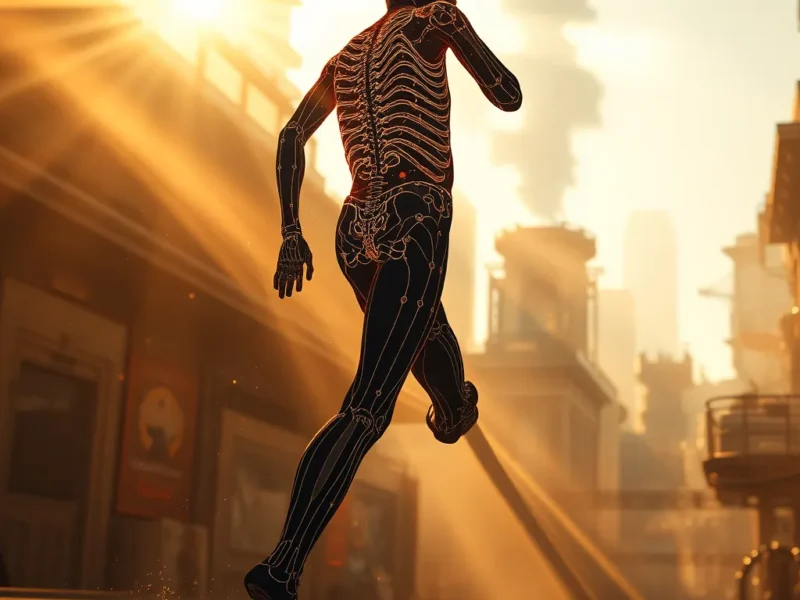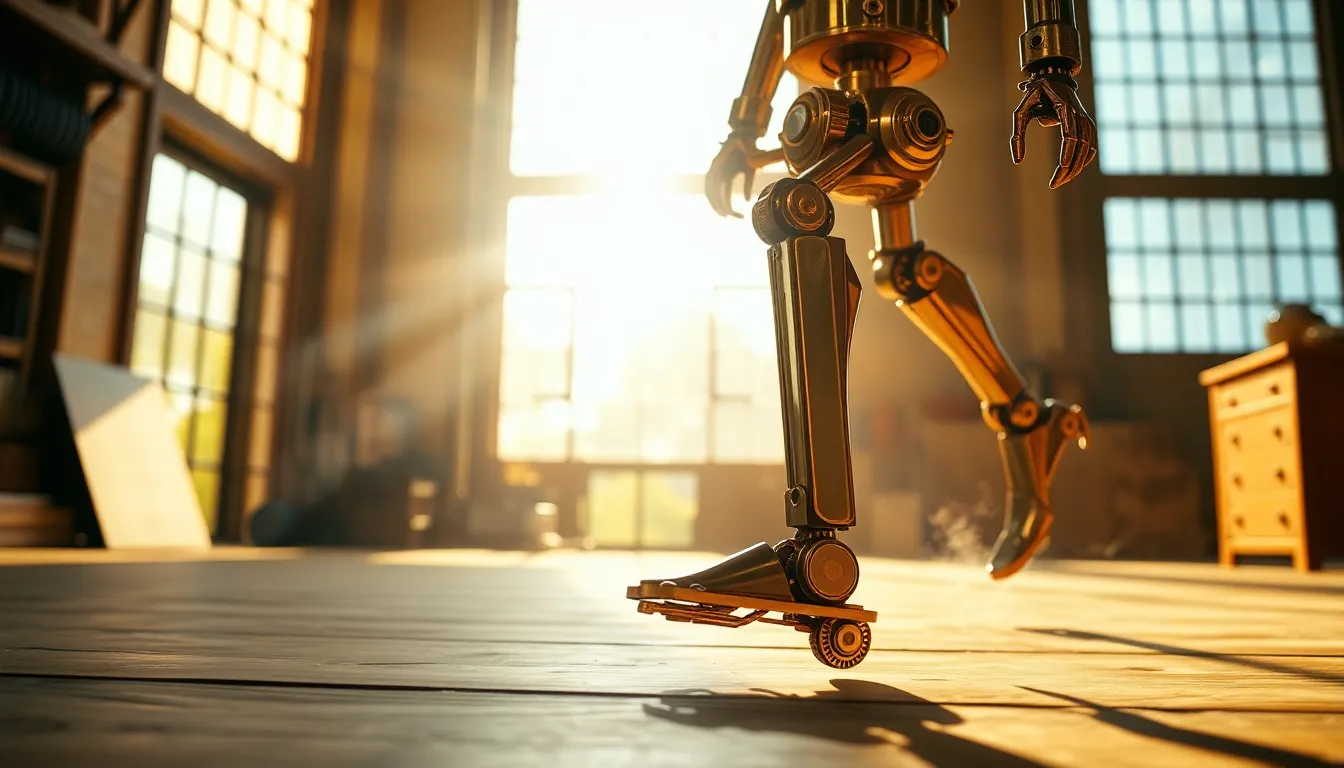
Teaching a robot to walk sounds simple enough - after all, most of us mastered it before we could talk. But for machines, walking is one of the hardest challenges in robotics. Every step requires thousands of split-second calculations, constant balance adjustments, and the ability to handle unexpected terrain. Now, artificial intelligence is changing how we approach this problem. Instead of programming every movement by hand, engineers are using AI to let robots teach themselves to walk through trial and error. The results are remarkable, and they're bringing us closer to humanoid robots that can navigate our world as naturally as we do.
How AI Learns Through Trial and Error
Reinforcement learning sits at the heart of modern robot walking training. This AI method works much like teaching a child - the robot tries different movements, falls down a lot, and gradually learns which actions lead to success. But unlike human learning, robots can practice in computer simulations that run thousands of times faster than real life.
In these high-fidelity physics simulations, a virtual robot can experience what would be years of walking practice in just a few hours of actual computing time. The AI adjusts its approach with each virtual step, building what researchers call a "walking policy" - essentially a set of rules about how to move its legs, shift its weight, and maintain balance under different conditions.
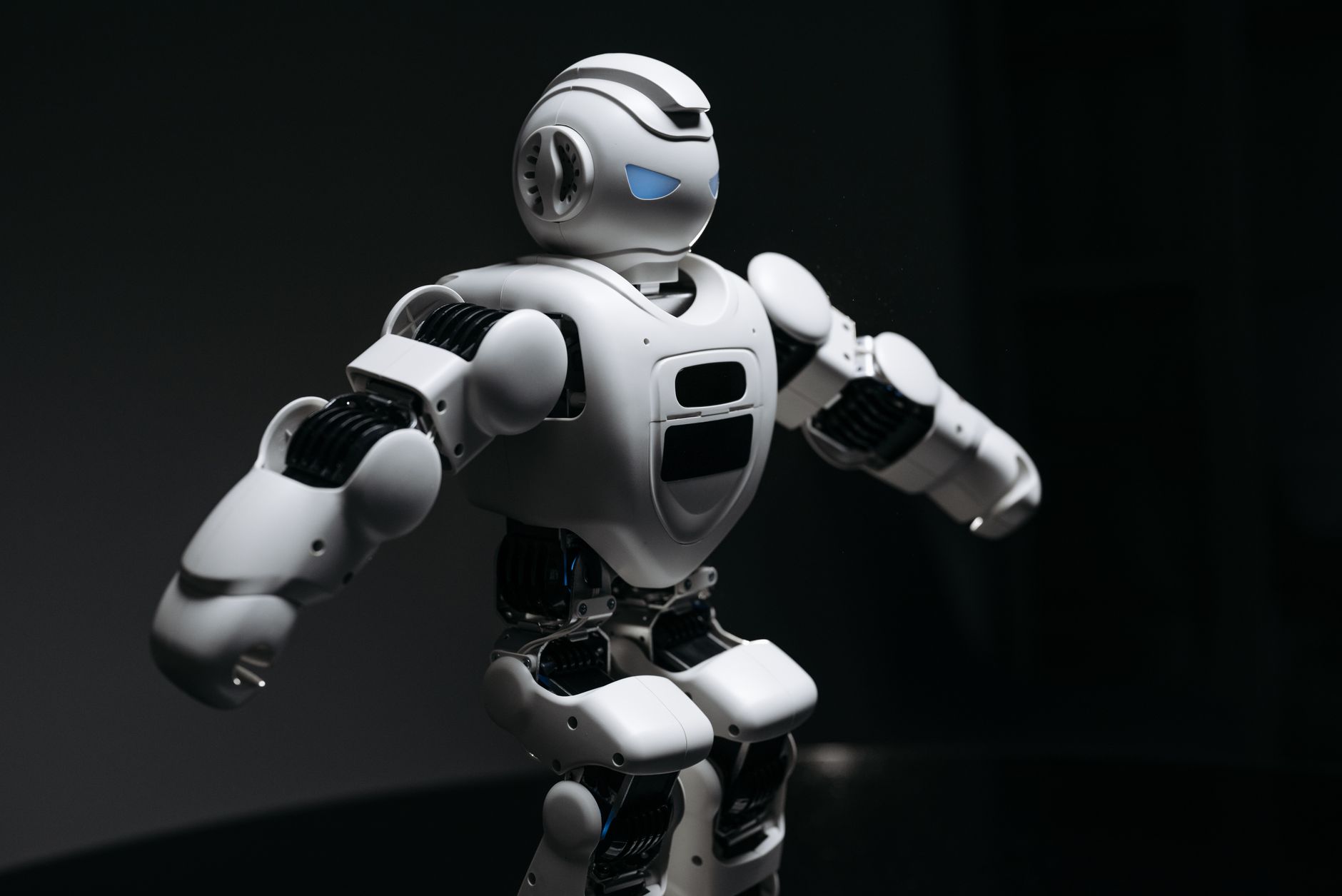
What makes this approach powerful is its flexibility. Traditional robot programming required engineers to manually code responses for every possible scenario. If the ground was too slippery, too soft, or at an unexpected angle, the robot would fail. With reinforcement learning, the AI discovers its own solutions to these problems through experience. It learns to adapt its gait when it starts to slip, adjust its stride length on uneven surfaces, and recover from near-falls - all without explicit programming for each scenario.
The simulation environment also allows for radical experimentation without risk. A physical robot that falls repeatedly during training suffers wear and tear, requires constant human supervision, and learns slowly. Its virtual counterpart can fall a million times, try impossible movements, and push the boundaries of what works - all while generating massive amounts of training data that refine the AI's understanding of balance and locomotion.
From Simulation to Reality
The concept researchers call "sim-to-real transfer" represents one of the biggest breakthroughs in robot training. After an AI learns to walk in a simulated environment, that knowledge transfers directly to a physical robot without needing further adjustments. This wasn't always the case - early attempts often failed because simulations didn't perfectly match real-world physics.
Modern simulations have become sophisticated enough to model friction, weight distribution, motor responses, and even slight manufacturing imperfections that affect how a robot moves. When the virtual environment closely mirrors reality, the walking strategies developed there work immediately in the physical world. This drastically cuts development time and cost.
Companies working on humanoid robots now routinely train their AI models entirely in simulation before ever powering on the physical machine. Boston Dynamics, Figure AI, and Tesla's Optimus team all use variations of this approach. The physical robot essentially downloads a walking policy that's already been tested through millions of simulated steps, then applies it to real motors and joints.
That said, reality always adds complications. Floor surfaces vary in ways simulations struggle to predict completely. Air resistance, temperature effects on motors, and tiny sensor errors all introduce challenges. Most training systems now include a final "fine-tuning" phase where the physical robot practices briefly in the real world, making small adjustments to its downloaded knowledge. But this phase takes hours or days instead of the months that pure physical training would require.
Understanding Walking as Controlled Falling
Human walking is fundamentally a process of controlled falling. With each step, we lean forward and let gravity pull us, then catch ourselves with the next foot placement. Our bodies constantly move forward while our feet work to regain balance. It's a dynamic, inherently unstable process that requires continuous adjustment - we're never truly in static equilibrium when we walk.
This insight shapes how AI approaches robot locomotion. Early humanoid robots tried to maintain perfect stability at every moment, moving slowly and cautiously from one static pose to the next. They looked stiff and robotic because they were fighting against the natural dynamics of walking. Modern AI-trained robots embrace instability, learning to fall forward and catch themselves just like humans do.
The AI must master several overlapping challenges simultaneously. It needs to predict where the center of mass will be after each movement. It must coordinate multiple joints - hips, knees, ankles - to execute smooth motions. It has to react to feedback from sensors that detect whether a foot has made solid contact with the ground. And it needs to handle unexpected disturbances, like someone pushing the robot or the ground shifting slightly underfoot.
What's fascinating is that the AI often discovers walking strategies similar to human movement without being explicitly programmed to mimic us. When given freedom to explore different gaits, reinforcement learning algorithms frequently converge on solutions that involve heel-to-toe rolling, arm swinging for balance, and bent-knee strides - all features of human walking that emerged through our own evolution. The physics of bipedal locomotion pushes both biological and artificial learners toward similar solutions.
Real-World Applications and Current Limitations
AI-trained walking is moving humanoid robots out of research labs and toward practical applications. Warehouse automation companies are testing bipedal robots that can navigate spaces designed for human workers, climbing stairs and stepping over obstacles that would stop wheeled robots. Healthcare facilities are exploring humanoid assistants that could help move patients or deliver supplies through buildings never designed with robots in mind.
The economic case is compelling. Retrofitting existing buildings for wheeled robots costs millions. A humanoid that walks like a person can work in those spaces immediately. This is why companies like Amazon and BMW are investing heavily in humanoid robotics research - the infrastructure compatibility could be transformative for industries struggling with labor shortages.
Still, significant challenges remain. Current AI-trained walking works well on flat, predictable surfaces but struggles with truly difficult terrain. Loose gravel, mud, ice, and steep slopes still cause failures. The algorithms also consume substantial computing power - most humanoid robots carry onboard computers running complex neural networks in real-time, which drains batteries quickly.
Energy efficiency is another hurdle. Human walking is remarkably energy-efficient because our tendons store and release elastic energy with each step. Most robots lack this biological efficiency, requiring much more power to move the same distance. Researchers are working on this through better mechanical design and smarter AI control strategies that minimize wasted energy, but we haven't matched human performance yet.
Safety concerns also need addressing before humanoid robots can work alongside people in uncontrolled environments. An AI that learned to walk through simulation might react unpredictably to scenarios it never encountered during training. Building in fail-safes and ensuring robots can safely stop or fall without causing harm requires additional layers of control beyond the core walking AI.
Conclusion
AI has fundamentally changed how we teach robots to walk, replacing hand-coded instructions with learned experience gained through massive simulation. The ability to train walking policies in virtual environments and transfer them to physical machines has accelerated progress dramatically. We're seeing humanoid robots that move with increasing naturalness, adapting to their environment and recovering from disturbances in ways that seemed impossible just years ago.
The technology isn't perfect yet. Real-world deployment still faces challenges around terrain difficulty, energy efficiency, and safety guarantees. But the trajectory is clear - AI-driven learning is solving one of robotics' hardest problems. As these systems improve, humanoid robots will become more practical for real-world work in environments built for human bodies. The robots learning to walk today are laying groundwork for machines that might genuinely share our physical spaces tomorrow, navigating stairs, doorways, and uneven ground as capably as we do.
FAQs
How long does it take to train a humanoid robot to walk using AI?
In simulation, the AI can experience years worth of walking practice in just a few hours of computing time. Once that simulated training completes, transferring the learned walking policy to a physical robot typically requires only hours or days of fine-tuning in the real world, rather than the months traditional programming methods would need.
Can these AI-trained robots walk on all types of terrain?
Not yet. Current systems handle flat surfaces, gentle slopes, and predictable obstacles quite well. However, challenging terrain like loose gravel, deep mud, ice, or very steep inclines still causes problems. The AI tends to perform best on surfaces similar to what it encountered during training simulations, though transfer learning is gradually expanding this range.
Do humanoid robots need constant internet connectivity to walk?
No, the trained walking policy runs locally on computers built into the robot itself. Once the AI completes its training and the walking model is downloaded to the physical machine, it operates autonomously without needing cloud connectivity. This local processing is essential for the fast reaction times required to maintain balance.
What happens if an AI-trained robot encounters something completely unexpected?
The robot's response depends on how different the new situation is from its training data. Small variations are usually handled through the learned adaptability of the AI. Completely novel scenarios might cause stumbling or stopping, which is why most systems include emergency stop protocols and conservative decision-making when confidence levels drop below safe thresholds.
Are there different AI approaches besides reinforcement learning for teaching robots to walk?
Yes, though reinforcement learning dominates current research. Some teams use imitation learning, where AI watches videos of humans or other robots walking and tries to copy those patterns. Others combine multiple approaches, using reinforcement learning for basic locomotion and adding supervised learning for specific tasks like stair climbing or carrying objects.