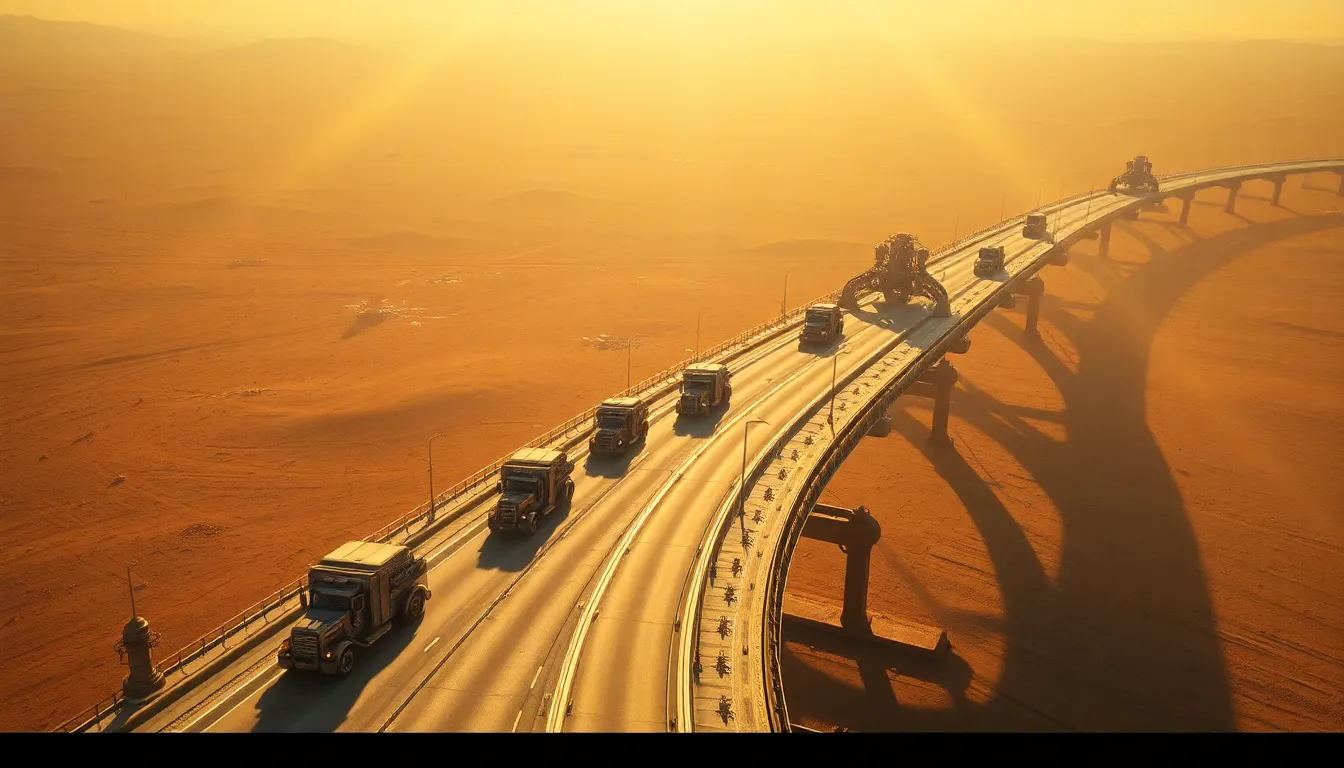
The trucking industry moves nearly everything we buy, from groceries to smartphones, across vast highway networks. But it faces a persistent problem: there aren't enough drivers to meet demand, and the ones on the road are bound by strict hours-of-service regulations that limit how far they can travel in a day. Enter autonomous trucks, powered by AI, promising to reshape how freight moves across continents. These self-driving rigs are designed primarily for long-haul highway routes, where the driving environment is more predictable than dense urban streets. With sensors, cameras, and AI decision-making systems, they can potentially operate around the clock, addressing driver shortages while keeping goods flowing. The technology isn't a distant dream anymore - it's already being tested on real highways, and the implications reach far beyond the trucking industry itself.
How Self-Driving Trucks Actually Work
Autonomous trucks rely on a sophisticated blend of hardware and software to perceive the world around them and make split-second driving decisions. The hardware layer includes lidar sensors that create detailed 3D maps of the environment, radar systems that detect objects and measure distances even in poor weather, and multiple cameras that provide visual context similar to what human eyes see. These sensors feed continuous streams of data to onboard AI systems that process the information in real time.
The AI software is where the magic happens. Machine learning models trained on millions of miles of driving data analyze sensor inputs to identify other vehicles, road markings, traffic signs, and potential hazards. The system predicts how other drivers might behave, plans safe trajectories, and executes steering, acceleration, and braking maneuvers. Unlike a human driver who might miss a detail while fatigued, these systems maintain constant vigilance across all sensor feeds simultaneously.
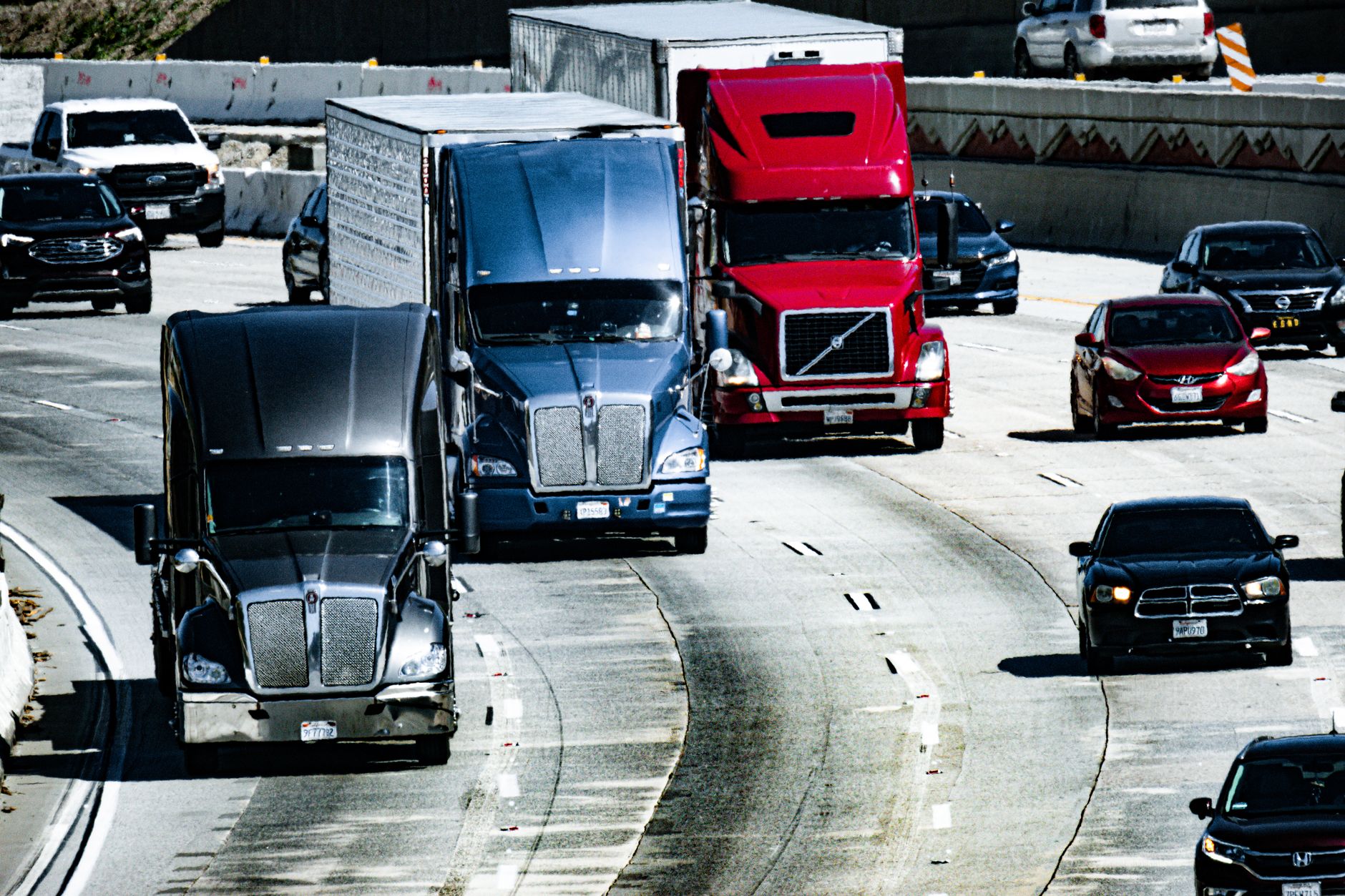
Highway driving offers a controlled environment that makes autonomy more achievable than city driving. There are fewer intersections, pedestrians, and unexpected obstacles compared to urban routes. Lane markings are clearer, traffic flows more predictably, and the driving task becomes more repetitive - exactly the kind of scenario where AI excels. That's why companies developing this technology focus first on long-haul interstate routes rather than trying to tackle every driving scenario at once.
Addressing the Driver Shortage Crisis
The trucking industry has been grappling with a serious driver shortage for years. The American Trucking Associations has reported shortfalls reaching tens of thousands of drivers, with projections suggesting the problem will worsen as experienced drivers retire and younger workers choose other careers. The job demands long hours away from home, irregular schedules, and physical strain that many find unappealing.
Autonomous trucks could help bridge this gap, though not necessarily by replacing human drivers entirely. One emerging model involves using self-driving trucks for the long, monotonous highway stretches while human drivers handle the complex first-mile and last-mile portions in urban areas. This "transfer hub" approach lets autonomous trucks run the interstate corridors connecting major freight hubs, then hand off trailers to local drivers for delivery to final destinations.
The ability to operate continuously without mandated rest breaks fundamentally changes the economics of freight transport. Human drivers in the United States must follow hours-of-service rules that limit driving to 11 hours within a 14-hour workday, followed by mandatory 10-hour rest periods. An autonomous truck doesn't need sleep, bathroom breaks, or meal stops. It could theoretically run 24/7, pausing only for fuel and maintenance, cutting delivery times significantly and increasing the productivity of each vehicle on the road.
This doesn't mean drivers will vanish overnight. The transition will likely unfold gradually, with autonomous systems handling specific routes first while human oversight remains part of the equation. Some drivers might shift into monitoring roles, overseeing multiple autonomous vehicles remotely and intervening when the AI encounters situations beyond its capabilities.
Safety, Regulation, and Public Acceptance
Safety stands as both the primary promise and the biggest question mark around autonomous trucks. Proponents argue that AI doesn't get drowsy, distracted by phones, or impaired by substances - factors that contribute to thousands of truck accidents annually. The systems react faster than humans and maintain perfect attention across all sensors simultaneously. Companies testing these trucks point to millions of autonomous miles driven with safety records they claim exceed human averages.
But the technology isn't perfect. Edge cases still challenge autonomous systems - unusual weather conditions, construction zones with temporary signage, or unexpected debris on highways. When something goes wrong with an 80,000-pound vehicle traveling at highway speeds, the consequences can be severe. That's why regulators are proceeding carefully, requiring extensive testing and often mandating safety drivers who can take control if needed.
The regulatory landscape varies dramatically by region. Some U.S. states have welcomed autonomous truck testing with relatively light oversight, while others impose strict requirements or outright bans. Europe has its own complex patchwork of national and EU-level regulations. Creating consistent rules across jurisdictions remains a work in progress, and until that happens, fully autonomous commercial deployment faces practical barriers even where the technology is ready.
Public acceptance matters too. Surveys show mixed feelings about sharing highways with driverless trucks. People worry about job losses, question whether the technology is truly ready, and feel uneasy about ceding control to algorithms in high-stakes situations. Building trust requires transparency from companies developing these systems, clear evidence of safety benefits, and time for the public to see autonomous trucks operating without incident.
Economic and Environmental Implications
The economics of autonomous trucking extend beyond just labor costs. While eliminating or reducing driver wages represents significant potential savings, companies must weigh that against the high upfront costs of the technology itself - the sensors, computing hardware, and software licenses aren't cheap. Maintenance and software updates add ongoing expenses. The payoff comes from higher vehicle utilization, faster delivery times, and potentially lower insurance costs if safety records prove superior.
Fuel efficiency could improve with AI at the wheel. Autonomous systems can optimize speed, acceleration, and braking more precisely than human drivers, reducing fuel consumption. Platooning - where multiple autonomous trucks travel closely together in a convoy to reduce aerodynamic drag - offers additional efficiency gains. Over millions of miles annually, even small percentage improvements in fuel economy add up to substantial cost savings and reduced emissions.
The environmental picture isn't entirely clear-cut, though. If autonomous trucks make freight shipping cheaper and more efficient, it could stimulate more consumption and shipping volume, potentially offsetting some emissions reductions. The manufacturing and eventual disposal of complex sensors and electronics also carry environmental costs. Still, optimized routing and fuel use represent meaningful steps toward greener logistics.
Labor market disruption looms as a serious concern. Millions of people worldwide drive trucks for a living. Even if the transition happens gradually and some drivers shift into new roles, displacement is inevitable. Communities built around truck stops and driver amenities could suffer economically. Policymakers will need to address retraining programs, social safety nets, and economic development strategies for affected workers and regions.
Conclusion
Self-driving trucks represent more than just a technological novelty - they're poised to reshape global supply chains, labor markets, and how we think about freight transportation. The core technology is advancing rapidly, with AI systems already demonstrating they can handle highway driving in many conditions. The potential benefits are real: addressing chronic driver shortages, enabling round-the-clock freight movement, and possibly improving safety outcomes. But so are the challenges: regulatory complexity, public skepticism, cybersecurity risks, and the social impact of displacing a major employment sector. We're in the early stages of a transition that will unfold over years, not months. The companies and countries that navigate this shift thoughtfully - balancing innovation with worker protections, safety with efficiency, and speed with public trust - will shape the future of how goods move around the world. For now, autonomous trucks are sharing highways with human drivers, learning, improving, and gradually proving whether they can deliver on their ambitious promises.
FAQs
Are autonomous trucks legal on public roads right now?
Legality varies by jurisdiction. Many U.S. states permit autonomous truck testing with safety drivers aboard, and a few allow limited driverless operations under specific conditions and routes. Some states still prohibit autonomous commercial vehicles entirely. In Europe, regulations differ by country, with some nations conducting pilot programs while others maintain stricter controls. Companies must navigate a complex patchwork of local, state, and national rules, and most current autonomous trucks still carry human safety operators even where fully driverless operation is technically legal.
What happens when an autonomous truck encounters severe weather?
Heavy rain, snow, fog, and ice present significant challenges for current autonomous systems. Sensors like lidar can struggle when rain or snow obscures their view, and cameras face the same visibility issues humans do. Most autonomous trucks operating today have weather limitations built into their operating parameters - they'll pull over or hand control to a human operator when conditions exceed safe thresholds. Developers are working on improved sensor fusion and AI models trained on adverse weather data, but for now, severe weather remains one of the technology's key limitations.
Can autonomous trucks be hacked or sabotaged remotely?
Cybersecurity is a genuine concern. Autonomous trucks rely on software, wireless connectivity for updates and monitoring, and sometimes vehicle-to-vehicle communication. Any connected system faces potential vulnerabilities to hacking attempts. Manufacturers implement multiple security layers - encrypted communications, isolated safety-critical systems, intrusion detection - but no system is completely invulnerable. The industry treats this as a critical priority because a compromised autonomous truck could cause catastrophic accidents. Ongoing security audits, penetration testing, and rapid patch deployment are standard practices, but the risk can never be reduced to absolute zero.
How do autonomous trucks handle unexpected road construction or detours?
Construction zones with temporary lane shifts, altered traffic patterns, and workers on or near the roadway are among the trickiest scenarios for autonomous systems. Current approaches include highly detailed mapping updated frequently to reflect construction, sometimes with human mappers driving routes to capture changes. Some systems can recognize construction signage and cones to adapt in real time, but complex situations may still require handing control to a human safety driver or remote operator. As the technology matures, AI models trained on thousands of construction zone scenarios should handle these situations more reliably, but for now, they remain a common reason for human intervention.
Will insurance costs for autonomous trucks be higher or lower than for human drivers?
Insurance pricing for autonomous trucks is still evolving as insurers gather data on actual safety performance. If autonomous systems prove safer than human drivers over millions of miles, premiums could eventually drop significantly since accident frequency drives costs. However, when accidents do occur with autonomous vehicles, liability questions become complex - is the truck manufacturer responsible, the AI software provider, the fleet operator, or some combination? Early autonomous truck insurance policies often carry higher premiums due to this uncertainty and the unknown risk profile. As the technology matures and legal frameworks clarify liability, insurance costs will likely adjust to reflect the actual safety record and clearer understanding of where responsibility lies.