
Imagine hundreds of drones moving through the sky as one fluid organism, each machine communicating with its neighbors to create patterns no single robot could achieve alone. This is swarm robotics, and it represents a fundamental shift in how we think about automation. Instead of programming one powerful machine to solve complex problems, swarm robotics coordinates many simple robots that work together using principles borrowed directly from nature. The result? Systems that can tackle search and rescue operations, monitor vast agricultural areas, and create stunning light displays with thousands of synchronized drones. We're moving beyond individual robots and into an era where collective intelligence drives real-world solutions.
How Swarm Robotics Takes Cues from Nature
Swarm robotics isn't a random engineering approach. It draws its fundamental principles from the collective behaviors observed in nature, such as ant colonies, bird flocks, and schools of fish. When you watch a murmuration of starlings twist and turn across the evening sky, no single bird is directing the movement. Each bird follows simple rules based on what its neighbors are doing, and that local decision-making creates the mesmerizing patterns we see from below.
The same logic applies to swarm robotics. Each robot operates with limited information about the world, responding to signals from nearby units and making decisions based on those immediate interactions. This approach mirrors how ants find the shortest path to food sources without a central commander telling them where to go. Individual ants leave chemical trails, and other ants follow stronger trails, reinforcing the most efficient routes through positive feedback.
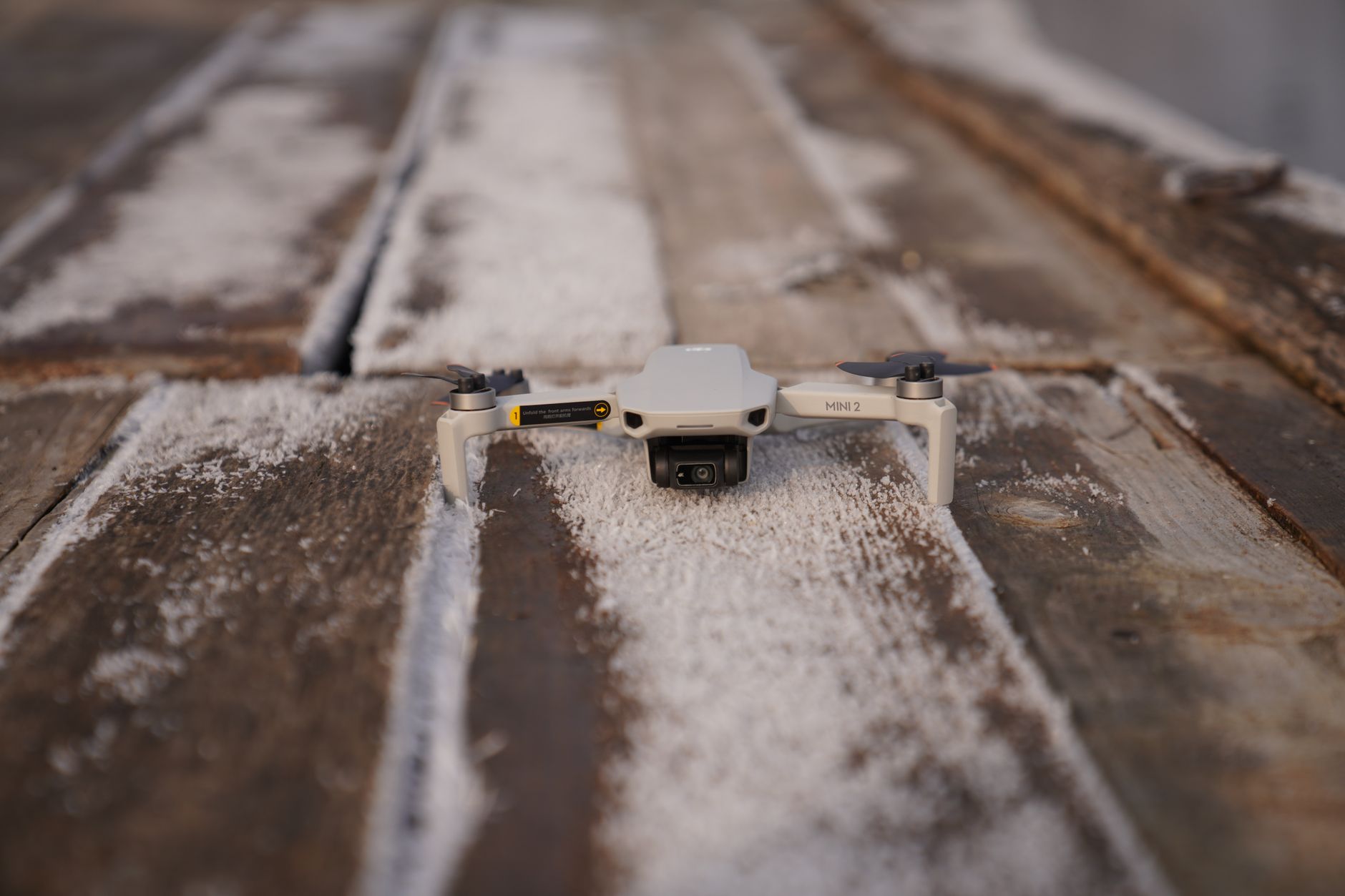
What makes this approach powerful is its inherent robustness. In nature, colonies continue functioning even when individual members die or get lost. The collective behavior emerges from thousands or millions of simple interactions, not from any single point of control. When we translate that to robotics, we get systems that don't collapse when one or even dozens of units fail. The swarm adapts, redistributes tasks, and keeps working toward its goal.
Decentralized Control and Why It Matters
A key characteristic of swarm robotics is decentralized control, meaning individual robots make decisions based on local information and interactions rather than a single command center. This might seem counterintuitive if you're used to thinking about traditional robotics, where a central computer calculates everything and sends precise instructions to each actuator. But centralized control creates bottlenecks and single points of failure.
In a swarm, there's no master robot calling the shots. Each unit runs the same basic algorithm and responds to what it senses in its immediate environment. If you're designing a swarm to map a disaster zone, each drone might follow rules like "stay within visual range of at least two other drones" and "move toward unexplored areas." No drone knows the full picture, but together they systematically cover the entire area.
This decentralized approach also makes swarm systems incredibly scalable. Swarm robot systems are designed to be robust and scalable, capable of functioning even if individual robots fail and able to expand in size without altering their underlying architecture. You can add more units to the swarm without rewriting the control software or redesigning the communication protocols. Each new robot simply joins the collective and starts following the same local rules as everyone else.
The trade-off is that programming swarms requires a different mindset. You're not choreographing specific movements, you're defining behavioral rules that will produce the desired emergent behavior when hundreds of robots interact. Getting those rules right takes careful testing, but once you do, the system becomes remarkably adaptable to changing conditions.
Real-World Applications Already Happening
Applications for swarm robotics span diverse fields including search and rescue missions, environmental monitoring, precision agriculture, and large-scale entertainment like drone light shows. These aren't theoretical future scenarios. We're seeing functional deployments right now that demonstrate the technology's practical value.
Search and rescue operations benefit enormously from swarm approaches. After an earthquake or building collapse, time matters desperately. A swarm of small drones can spread out across a disaster site, using thermal imaging and acoustic sensors to detect survivors trapped under rubble. Because the swarm operates collectively, it can cover ground far faster than a single sophisticated robot, and the system continues working even if debris damages several units.
Precision agriculture represents another major application area. Farmers managing thousands of acres need detailed information about soil conditions, crop health, and pest infestations. A swarm of ground robots can move through fields, taking measurements at regular intervals and sharing data to build a comprehensive map. This kind of distributed sensing would take weeks with manual inspections but happens in hours with a coordinated swarm.
Environmental monitoring projects use swarms to track water quality across large bodies of water, measure air pollution in urban areas, or monitor wildlife populations without disturbing them. The ability to deploy many low-cost sensors simultaneously gives researchers data density that was previously impossible to achieve.
Then there's entertainment. One drone light show featured 10,197 drones, creating massive three-dimensional images in the night sky. Each drone knows only its own position and timing, but together they produce coordinated animations visible for miles. These shows demonstrate both the technical maturity of swarm coordination algorithms and the public's fascination with seeing collective robotics in action.
The Technology Behind the Coordination
Making hundreds or thousands of robots work together requires solving several hard technical problems. Communication sits at the core of swarm behavior. Robots need to exchange information with their neighbors constantly, but traditional WiFi or cellular connections don't scale well when you have thousands of units trying to talk at once.
Many swarm systems use short-range radio communication protocols that limit each robot to talking with nearby units. This creates a mesh network where information propagates through the swarm gradually. If a robot on one edge detects something important, that information ripples through the group as each unit shares it with its neighbors. The system trades communication speed for reliability and scalability.
Localization presents another challenge. Each robot needs to know roughly where it is relative to its neighbors, but GPS accuracy degrades when robots are close together or operating indoors. Swarm systems often use sensor fusion, combining data from accelerometers, gyroscopes, cameras, and ranging sensors to maintain situational awareness. Some swarms use visual markers, where each robot displays a unique pattern that others can recognize and use to estimate distance and orientation.
Back in 2014, Harvard demonstrated a Kilobot swarm comprised of 1,024 individual robots. These coin-sized machines used vibrating motors to move and infrared light to communicate. Despite their simplicity, the Kilobot swarm could form shapes, sort themselves by characteristics, and execute coordinated group behaviors. That demonstration proved swarm algorithms could scale to thousands of units using relatively simple hardware.
Battery life and energy management remain practical constraints. Small robots carry small batteries, and coordinating with neighbors constantly drains power. Many swarm designs include behaviors where some robots enter low-power sleep modes while others stay active, rotating roles to extend the overall mission duration.
Conclusion
Swarm robotics represents a genuine paradigm shift in automation. By embracing decentralized control and collective behavior, engineers have created systems that accomplish tasks no single sophisticated robot could handle alone. The technology has moved beyond laboratory demonstrations into practical deployments across disaster response, agriculture, environmental science, and public entertainment.
The challenges that remain are mostly about refinement rather than fundamental capability. Making swarms more energy efficient, improving communication reliability in harsh environments, and developing better tools for programming emergent behaviors will all expand what these systems can do. As hardware costs continue dropping and algorithms mature, we'll see swarms tackling increasingly complex coordination problems.
What's particularly striking about swarm robotics is how it succeeds by working with simplicity rather than against it. Instead of building one incredibly smart machine, we build many simple ones and let intelligence emerge from their interactions. That approach doesn't just work, it often outperforms centralized alternatives in robustness and scalability. Nature figured this out millions of years ago, and we're finally catching up.
FAQs
What happens if several robots in a swarm break down during a mission?
The swarm continues operating with minimal disruption because no individual robot is essential. The remaining units detect gaps in the formation and adjust their behavior to compensate, redistributing the workload automatically. Most swarm algorithms are specifically designed to tolerate failure rates of 20 to 30 percent without significant performance degradation, making them more reliable than single-robot systems in unpredictable environments.
Can swarm robots be used indoors where GPS doesn't work?
Yes, indoor swarms typically rely on relative positioning using visual markers, ultrasonic ranging, or radio signal strength between neighbors rather than absolute GPS coordinates. Some systems use ceiling-mounted beacons or cameras that track all robots from above and broadcast position corrections. The lack of GPS actually makes indoor swarms an interesting technical challenge that has driven innovation in localization algorithms.
How do you program a swarm to do something specific?
Instead of scripting exact movements, programmers define behavioral rules and objective functions that each robot follows independently. Simulation tools let developers test how these local rules produce global behaviors before deploying on physical hardware. It requires thinking about desired outcomes rather than step-by-step procedures, and teams often iterate through dozens of rule variations to achieve the right emergent behavior.
Are there regulations limiting where drone swarms can fly?
Aviation authorities in most countries treat swarms as multiple aircraft, meaning each unit technically needs compliance with drone regulations including altitude limits, no-fly zones, and operator certification requirements. Some jurisdictions have created special exemptions for controlled swarm demonstrations, but large-scale commercial deployments still navigate complex approval processes. The regulatory framework is evolving as the technology proves itself safe through repeated successful operations.
What prevents a swarm from getting confused and crashing into each other?
Collision avoidance is a core component of swarm algorithms, usually implemented through virtual repulsion forces where each robot treats nearby units as obstacles to steer around. This happens at the millisecond timescale, far faster than any centralized controller could manage. Hardware redundancy also helps, with multiple proximity sensors providing overlapping coverage so temporary sensor glitches don't cause accidents. Modern swarms flying in tight formations maintain safety through constant micro-adjustments rather than pre-planned paths.