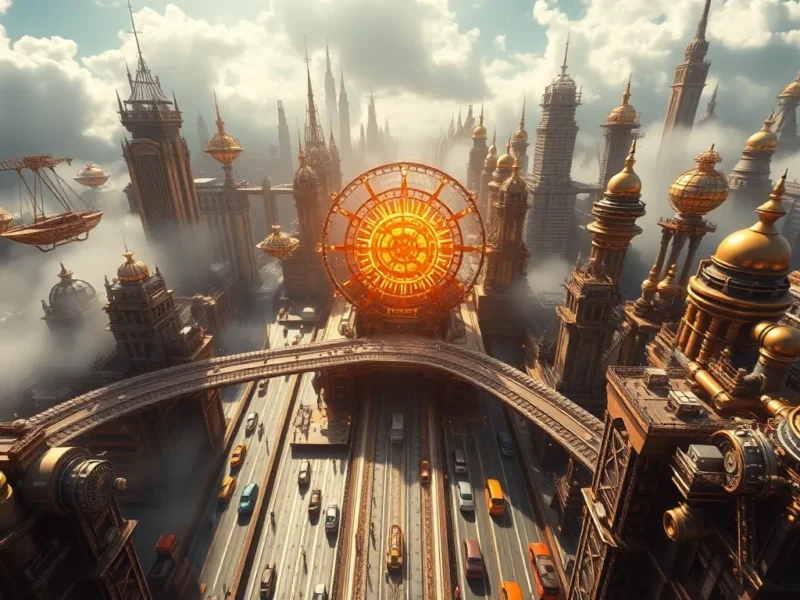
You know, sometimes when you’re playing a game, you just get this feeling that you’ve seen it all before. The enemies move in predictable patterns, the levels, well, they just feel… static. But imagine a game where every playthrough feels genuinely fresh. Where the bad guys learn from your moves, and the very world around you shifts and changes each time you boot it up. That's not just a pipe dream anymore. We're talking about dynamic AI in gaming - the kind that brings adaptive enemies and procedural worlds to life. It’s a pretty exciting space, honestly, and it’s changing how we think about game design. This isn't just about making games harder; it's about making them smarter, more immersive, and way more fun to play. It’s about giving players something truly new, every single time. And to be fair, that’s a huge deal for replayability and keeping things interesting.
Adaptive Enemies: When the Bad Guys Get Smart
Think about the AI in most games. You dodge left, they shoot right. You take cover, they flank. But after a few rounds, you start to see the patterns, right? You figure out their "strategy" and then it's just about execution. Adaptive enemy AI is different. It’s about enemies that actually observe your playstyle, learn from it, and then change their tactics to counter you. For instance, if you always go for headshots, a smart enemy might start wearing helmets more often or adopting evasive maneuvers that make headshots harder. If you favor stealth, they might increase patrols in areas you frequent or place more sensors. It’s a pretty complex dance.
So, how do you even begin with something like this? Often, it starts with a layered approach. You might have a base AI behavior, like a simple patrol or attack script. Then, on top of that, you introduce a learning component. This could be something like a reinforcement learning model, where the AI is rewarded for actions that successfully counter the player and penalized for failures. Tools? Well, you're looking at things like behavior trees, sure, but also more advanced machine learning libraries, maybe even a bit of neural network magic for really sophisticated stuff. Unity and Unreal Engine both offer ways to extend their AI systems, letting you hook into external libraries or build your own custom solutions. One common mistake people make is trying to make the AI too smart right out of the gate. That often leads to AI that feels unfair or just plain unbeatable, which is, honestly, not fun for anyone. It's tricky to find that sweet spot between challenging and frustrating. Small wins here might involve teaching an enemy to simply prioritize a different weapon based on player health, or to use cover more effectively after being hit a few times. It’s about gradual improvement, not a sudden jump to superhuman intellect.
Behavior Trees and State Machines: The Building Blocks
Before diving into really complex learning, most adaptive AI still relies on core AI structures like behavior trees and state machines. A state machine defines a finite set of states (like "patrolling," "attacking," "fleeing") and rules for transitioning between them. A behavior tree, on the other hand, lets you create more complex, hierarchical decision-making logic - "If player visible, then attack; else, if suspicious, then investigate; else, patrol." What happens when you combine these with adaptive elements? Well, the adaptive AI might learn to change the parameters of these states or trees. Maybe it learns that "fleeing" is a better option when player health is high, or it adjusts the "attack" state to prioritize melee over ranged depending on player distance. Getting this right is about iterating a lot. You build a basic system, play against it, see what feels off, and then tweak the learning rules.
Procedural Worlds: Every Game is a New World
Alright, so we've talked about smart enemies. Now, let's talk about smart worlds. Procedural generation in games isn't new; we've seen it in games like Minecraft or No Man's Sky. But dynamic procedural generation takes it a step further. It's not just about randomly slapping together pre-made pieces. It's about generating unique, coherent, and often story-driven environments on the fly, sometimes even adapting to player actions or preferences. Imagine a dungeon crawler where the layout not only changes every time you play but also subtly shifts based on your chosen class, favoring open spaces for a ranged character or tight corridors for a melee build.
So, how does one even start with something like this? A common starting point involves algorithms like Perlin noise or Voronoi diagrams for generating terrain or basic structural layouts. You use these mathematical functions to create natural-looking variations. But the real magic happens when you layer on rules and constraints. For example, you might say, "always place a treasure chest near a difficult enemy" or "ensure a path exists from start to finish." Where it gets tricky is ensuring both variety and quality. Pure randomness often creates boring or broken levels. That's where things like grammar-based systems or even more advanced AI-driven approaches come into play. These systems learn from examples of good level design and then try to generate new ones that adhere to those learned "rules." People often mess this up by over-relying on simple randomization, which just ends up feeling same-y after a while. The goal isn't just random; it's meaningful random. Small wins here? Getting a basic, playable dungeon to generate reliably. Then, slowly adding in more complex elements like traps, puzzles, or environmental storytelling elements that still fit the generated layout.
Content Generation and Storytelling: Beyond Just Maps
The cool thing about procedural generation isn't just the maps; it's also the potential for procedural content generation - things like quests, character backstories, or even entire narrative arcs. Imagine a system that generates a unique villain for each playthrough, complete with their own motivations, strengths, and weaknesses, all of which influence the world and quests you encounter. This takes a lot more than just noise functions. You might use natural language processing (NLP) techniques for generating text, or complex rule-based systems to connect plot points. A classic example where people sort of miss the mark is generating quests that feel generic and repetitive, like "go fetch X item." The real challenge is creating quests that feel organic and tied into the procedurally generated world and its characters, making each playthrough genuinely distinct. It's a huge undertaking, but when it works, it makes a game feel infinitely replayable.
The Synergy: How Adaptive AI and Procedural Worlds Work Together
Okay, so we've got enemies that learn and worlds that change. What happens when these two ideas meet? That's when things get really interesting. Imagine a game where the procedural world generation isn't just random; it's informed by the AI's learning. If the adaptive enemies discover players are consistently exploiting a certain type of cover in procedurally generated arenas, maybe the next iteration of the arena generation algorithm might subtly reduce the prevalence of that cover type, or introduce new angles of attack. Or, conversely, if the procedural generation creates a map that unintentionally favors stealth, the AI might adapt by increasing enemy awareness or patrol density.
This kind of synergy is where games can truly become dynamic. It's not just about isolated systems; it's about a feedback loop. The AI learns from the player in the generated world, and then the world itself might adapt in response, or the AI might receive new parameters based on the world's structure. Think about a boss fight that takes place in a procedurally generated arena. If the player finds a specific choke point to exploit, the AI might learn to avoid that choke point, and future generations of the arena might alter that area to make the exploit less effective or introduce new hazards. It's a very ambitious goal, and honestly, a lot of what we see today is still sort of a simplified version of this ideal.
One of the biggest hurdles here is managing complexity. When both the AI and the world are dynamic, testing becomes incredibly difficult. You can't just playtest a static level anymore; you need to test against an infinite number of possible levels and AI behaviors. This is where AI testing tools and simulations become crucial - letting AI "play" the game thousands of times to identify breaking points or unintended consequences. People sometimes get overwhelmed here, trying to connect everything at once. Small wins come from linking just one or two simple parameters - like enemy spawn points adjusting based on player movement patterns within a generated space, or environmental hazards appearing more often if the player is too static. It’s about building those connections incrementally.
Real Challenges and the Road Ahead
Look, building dynamic AI and procedural worlds isn't a walk in the park. We've talked about some of the technical challenges, like creating robust learning models or ensuring generated content is both varied and high-quality. But there are also creative challenges. How do you maintain a consistent artistic vision or narrative when the world is constantly changing? How do you hand-craft memorable moments when everything is procedural? This is where a lot of developers sort of struggle.
One big challenge is the expressivity problem in procedural content generation. It's hard to make a machine generate something truly "beautiful" or "meaningful" without a human touch. While algorithms can create stunning landscapes, they might lack that specific artist's signature or the emotional resonance of a meticulously designed scene. It's not just about technical capability; it's about art and emotion.
Then there's the player experience. If the AI is too adaptive, it can feel like the game is "cheating" or unfairly punishing the player. If the world is too random, it can feel disjointed or lack a sense of place. Finding the right balance is, honestly, an ongoing experiment. Developers need to constantly iterate, collect player feedback, and tune these systems. We're still very much in the early days of truly dynamic systems. Tools are evolving, though. Things like machine learning-assisted content creation are gaining traction, where AI helps artists generate assets or levels rather than replacing them entirely. Imagine an AI that suggests level layouts based on a designer's sketches, or helps populate an environment with fitting props. That’s a powerful combination - human creativity guided and amplified by AI. The biggest hurdle, I think, is our own imagination for what’s possible, and also, the sheer computational power needed to make some of these ideas a reality in real-time.
FAQs: Questions People Actually Ask
How does dynamic AI really differ from traditional game AI?
Traditional game AI often relies on pre-scripted behaviors and rules, meaning it generally does the same thing in similar situations. Dynamic AI, on the other hand, can learn and adapt its strategies based on player actions or changes in the game world. It's less about following a fixed script and more about evolving its behavior over time.
What kind of games benefit most from procedural worlds?
Games that emphasize exploration, replayability, or rogue-like elements often benefit hugely from procedural worlds. Think about titles like No Man's Sky with its vast, generated planets, or rogue-likes where each dungeon run is different. It keeps the experience fresh and unpredictable, which is a big draw for those genres.
Is dynamic AI in gaming too hard to implement for small indie teams?
Honestly, getting deeply into advanced dynamic AI can be very complex and resource-intensive, which might be a challenge for small indie teams. However, there are simpler forms of adaptive AI, like adjusting enemy difficulty based on player performance, that are more achievable. Also, many modern game engines provide tools that can help get started with some basic procedural generation without needing a huge team. Start small, that’s key.
Can procedural generation negatively affect game narrative or artistic vision?
Yes, it certainly can if not handled carefully. Purely random procedural generation might create worlds that feel disjointed or lack a cohesive story. The trick is to infuse the generation process with strong rules and artistic constraints that guide the algorithms, ensuring the generated content still aligns with the game's overall narrative and visual style. It's about generating within a framework, not just throwing dice.
What are some practical examples of dynamic AI in games right now?
Well, games like Left 4 Dead use an "AI Director" that subtly changes enemy spawns and item placement based on player performance, sort of dynamically adjusting difficulty. Some modern strategy games also have AI opponents that can adapt their economic or military strategies over a campaign. It’s not always super obvious; sometimes it’s very subtle, and that's often when it works best.
Conclusion: The Future is Flexible
So, what's the big takeaway here? Dynamic AI in gaming, whether it’s making enemies smarter or worlds more unique, is about pushing games beyond static experiences. It's about delivering something that feels genuinely responsive and surprising, even after dozens or hundreds of hours. This isn't just about making games "better" in some abstract sense; it's about making them deeper, more personal, and capable of infinite discovery. We're moving past the idea that a game is a fixed, unchanging artifact, and instead, embracing the idea of games as living, breathing ecosystems that evolve with the player.
It’s a tough road, for sure. Getting adaptive enemies to feel fair and not frustrating, or making procedural worlds feel handcrafted and meaningful - these are huge design challenges. And honestly, I’ve learned the hard way that sometimes the simplest adaptive AI, one that just slightly tweaks a parameter or two, can be more effective and less development-heavy than some grand, complex machine learning model. It's all about finding that sweet spot where the technology enhances the fun, not just the complexity. The future of gaming, I think, lies in this kind of flexibility, where every playthrough isn't just a repeat, but a truly new story unfolding just for you. And that, really, is a pretty exciting thought.