You know, it's wild to think how far we've come with computers making pictures. Not just editing them, but actually creating them from scratch. I mean, we're talking about images so good, so convincing, it's tough to tell them apart from a real photograph. And a lot of that magic, honestly, comes from something called Generative Adversarial Networks, or GANs. These things have totally changed how we think about artificial creativity, especially when it comes to whipping up incredibly lifelike faces or even entire imaginary environments. It felt like something out of a sci-fi flick not too long ago, this idea of machines dreaming up visuals. But here we are, watching GANs get better and better, learning to paint digital masterpieces that never existed before. It's a field moving so fast, sometimes it feels like trying to catch smoke, but the results? They speak for themselves, really. We've moved past blurry, abstract shapes to crisp, detailed faces staring right back at you, or sweeping landscapes that feel utterly plausible. It’s not just a parlor trick; it's a deep dive into what machines can learn about visual information and how they can then twist and turn that knowledge into something new.
The Clever Trick of GANs: How They Really Work
So, what are GANs, actually? At their core, they're a bit like a competition, or maybe a really intense game between two neural networks. One network, we call it the "generator," tries to create something new - an image, in our case. The other, the "discriminator," acts like a critic. Its job is to look at images and figure out if they're real or if they were cooked up by the generator. Think of it this way: the generator is an art forger, always trying to make a fake painting so convincing it fools an expert. The discriminator is that expert, constantly trying to spot the fakes. They go back and forth, learning from each other's mistakes.
Every time the discriminator correctly identifies a fake, the generator gets a nudge to try harder, to make its next fake more believable. And when the discriminator gets fooled by a generator's creation, the discriminator itself learns to be a bit more perceptive next time. This constant, almost adversarial training is what makes generative adversarial networks so powerful. They push each other to improve. The generator gets better at producing realistic images, and the discriminator gets better at telling real from fake. This loop just repeats, thousands, sometimes millions of times, until the generator gets so good that its output is virtually indistinguishable from real data. It's a pretty ingenious setup, to be fair. And honestly, it’s this simple-but-powerful idea that lets them achieve such impressive high-quality image synthesis.
Making Faces That Aren't Real - The StyleGAN Story
When it comes to generating incredibly lifelike human faces, one name often pops up: StyleGAN. It's not the only player, but it really pushed the boundaries for realistic face generation. Before StyleGAN, GANs could make faces, sure, but they often had weird artifacts, like mismatched eyes or a general "uncanny valley" vibe. StyleGAN changed that by giving us much more control over the generation process. It separates different aspects of a face - like pose, age, or even just random noise - so you can adjust one without totally messing up the others. We call this "disentangled representation," and it's a big deal.
If you want to dive into this, you're usually looking at tools like PyTorch or TensorFlow, which are popular deep learning frameworks. NVIDIA released StyleGAN, and they often provide pre-trained models. That's a good way to start; you don't have to train it from zero, which takes ages and tons of computing power. You can fine-tune an existing model or use it directly. Where people often go wrong, I've noticed, is thinking any dataset will do. But for high-quality image synthesis, especially with faces, your training data needs to be really clean, diverse, and well-aligned. If your initial images are messy or biased, your generated faces will reflect that, and they'll look, well, not quite right. Honestly, a small win in this area is just getting a face that looks like a plausible human, without strange distortions. Once you get past that, you can start tweaking the details, and that’s where it gets pretty fun.
Beyond Faces: Crafting Entire Imaginary Worlds
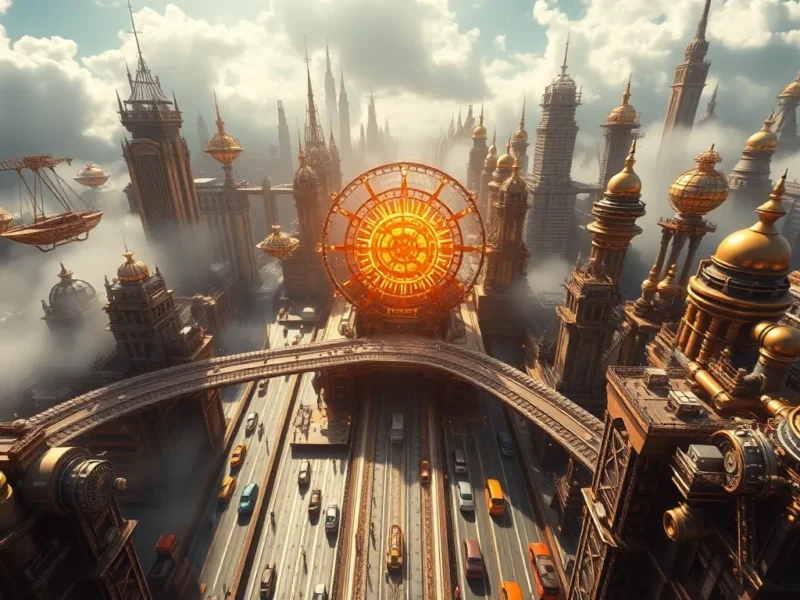
Okay, so faces are one thing - super detailed, but generally quite constrained in terms of structure. Generating entire scenes, though? That’s a whole different ball game. Think about it: a landscape has trees, skies, water, maybe buildings. A city scene has cars, people, streetlights, varying architecture. The complexity just explodes. This kind of realistic scene generation requires a GAN to understand not just individual objects but their spatial relationships, lighting consistency, and overall coherence. It's a much tougher challenge than just making a single, isolated face.
To tackle this, researchers often use conditional GANs. This means you give the GAN some guidance, like a "sketch" or a "semantic map," telling it where the sky should be, where the road is, where a building goes. Then the GAN fills in the details. Tools like SPADE-GAN (another NVIDIA creation, funny enough) have shown impressive results here, creating photorealistic images from these semantic layout maps. You'd typically use specialized datasets like Cityscapes for urban environments or COCO for general objects and scenes. It gets tricky when the generator has to create elements it hasn't seen much of, or if it tries to put things in odd places. Maintaining global consistency - like having the shadows fall correctly across an entire scene, or making sure the perspective is right - is where these models can really stumble. Honestly, sometimes you just get really bizarre artifacts, like a tree growing out of a car, and you realize how much more the model still needs to learn about how the world works. But when it clicks, seeing a whole new, believable environment pop into existence is just… something else.
The Tricky Parts: Ethics, Bias, and Deepfakes
With all this amazing capability to create realistic imagery, there are, of course, some pretty significant downsides and ethical concerns that we absolutely need to talk about. The big one everyone points to is "deepfakes." This is where GANs are used to put someone's face onto another person's body in a video, often with malicious intent. It's not just a technical curiosity anymore; it's a real tool that can spread misinformation, damage reputations, or worse. The ability to generate fake but convincing content is a powerful double-edged sword, and honestly, we're still figuring out how to deal with it on a societal level.
Then there's the issue of bias. If you train a GAN predominantly on images of one demographic - say, faces of people from a specific region or with certain skin tones - guess what? It's going to be much better at generating new faces that look like those people. It might struggle, or even fail completely, to create realistic images of others. This is a common problem in AI: "garbage in, garbage out," or more accurately, "biased data in, biased results out." It's not the GAN being intentionally biased; it's just reflecting the data it was fed. So, creating diverse, representative datasets for generative model training is a huge challenge that needs constant attention. Detecting synthetic media is also becoming its own field of research, trying to find ways to identify GAN-generated content before it causes too much trouble. It's a race, really, between those who create and those who try to verify.
What's Next for Generative Models?
So, where are these amazing generative models headed? It's hard to say for sure, because things move so fast, but we're seeing some definite trends. One big area is even finer control over the output. Imagine not just generating a face, but specifically asking for a "happy face, slightly older, with green eyes and a short haircut." Models that can take detailed text descriptions, like DALL-E (which isn't strictly a GAN but shares similar goals), are showing us a glimpse of that future. It's about being able to steer the creative process with natural language, making these tools accessible to a much wider audience beyond just machine learning experts.
We're also likely to see advancements in training efficiency. GANs can be notoriously hungry for computational resources and huge amounts of data. Making them train faster, with less data, or on less powerful hardware, would be a game-changer. Imagine someone being able to prototype design ideas instantly, just by describing them, without needing massive server farms. Also, there's a constant push for even more diversity in the generated outputs, making sure they can create a truly wide range of realistic images without falling into repetitive patterns or exhibiting biases. Honestly, the potential extends into so many creative fields - from art and design to entertainment and even scientific visualization. These tools are becoming powerful creative partners, and watching them learn to "imagine" in increasingly sophisticated ways is just fascinating.
How do GANs create such realistic images?
GANs work by pitting two neural networks against each other: a generator that tries to create fake images, and a discriminator that tries to tell if an image is real or fake. This ongoing competition pushes both networks to get better, with the generator learning to produce incredibly convincing images that can fool the discriminator, making them highly realistic.
What's the difference between generating faces and generating scenes with GANs?
Generating faces with GANs is still complex but often more constrained, as faces share a relatively consistent structure. Generating entire scenes, like landscapes or cityscapes, is generally much harder because scenes have far greater variation in objects, textures, lighting, and spatial relationships, requiring the GAN to understand a much broader visual context.
Can GANs make things that are completely new, or do they just mix existing images?
GANs don't just "mix" existing images in a simple collage sort of way. They learn the underlying patterns, features, and styles present in their training data. From this learned understanding, they can then synthesize entirely novel images that adhere to those patterns, effectively creating things that are completely new, yet statistically similar to their training examples.
What are some real-world applications of these powerful image generators?
These powerful image generators have many real-world applications, from creating synthetic datasets for training other AI models, generating unique assets for video games and virtual reality, assisting in architectural design, creating custom avatars, and even helping artists explore new creative directions with generative adversarial networks.
Are there ethical concerns with GAN-generated content?
Yes, there are significant ethical concerns. The most prominent is the creation of "deepfakes," which can be used to spread misinformation or harm individuals. There are also worries about algorithmic bias if the training data isn't diverse, leading to models that perform poorly or unfairly for certain groups.
Conclusion
So, there you have it - a look into GANs and how they’ve evolved to create these incredibly convincing faces and scenes. It’s truly something that felt impossible not so long ago, watching machines essentially learn to draw and paint in ways that mimic our world, or even invent new ones. The idea of a generator and discriminator constantly trying to outsmart each other is pretty ingenious, and it’s what gives them their amazing ability for realistic image synthesis. We've seen how specific models like StyleGAN opened up new doors for face generation, giving us unprecedented control over the smallest details. And then, there's the jump to crafting entire imaginary worlds, which is a whole other level of complex.
But it’s not all sunshine and perfect pixels, right? We've also touched on the real, pressing issues - things like deepfakes and the inherent biases that can creep in if we're not careful with our training data. These aren't just technical quirks; they're societal challenges we need to figure out as these tools become more widespread. What's worth remembering here is the sheer potential these generative models hold for creativity, for design, for simulation, alongside the serious responsibility that comes with such power. One thing I've learned the hard way in this field is that you can have the most brilliant GAN architecture, but if your data is messy, incomplete, or biased, your results will be, well, a mess. The models are only as good as what we feed them, honestly. The future is exciting, definitely, but it also asks us to think carefully about how we build and use these incredible digital artists.