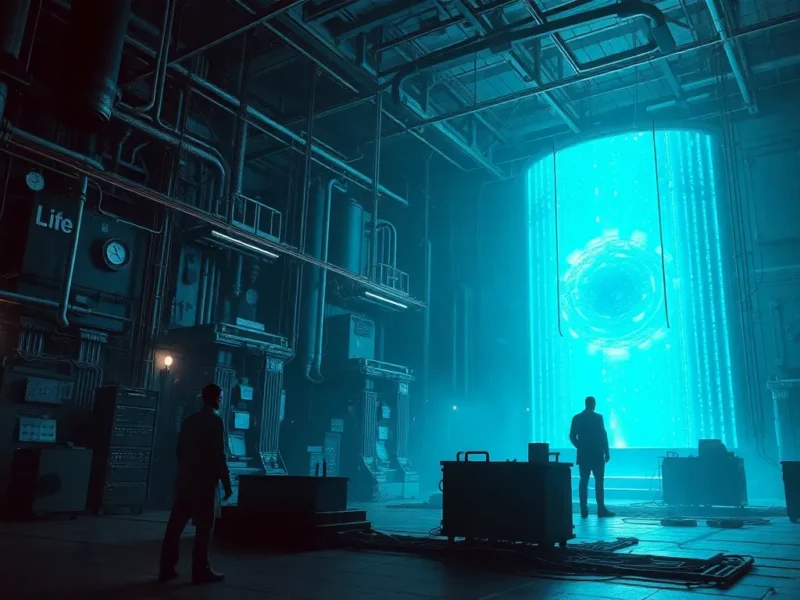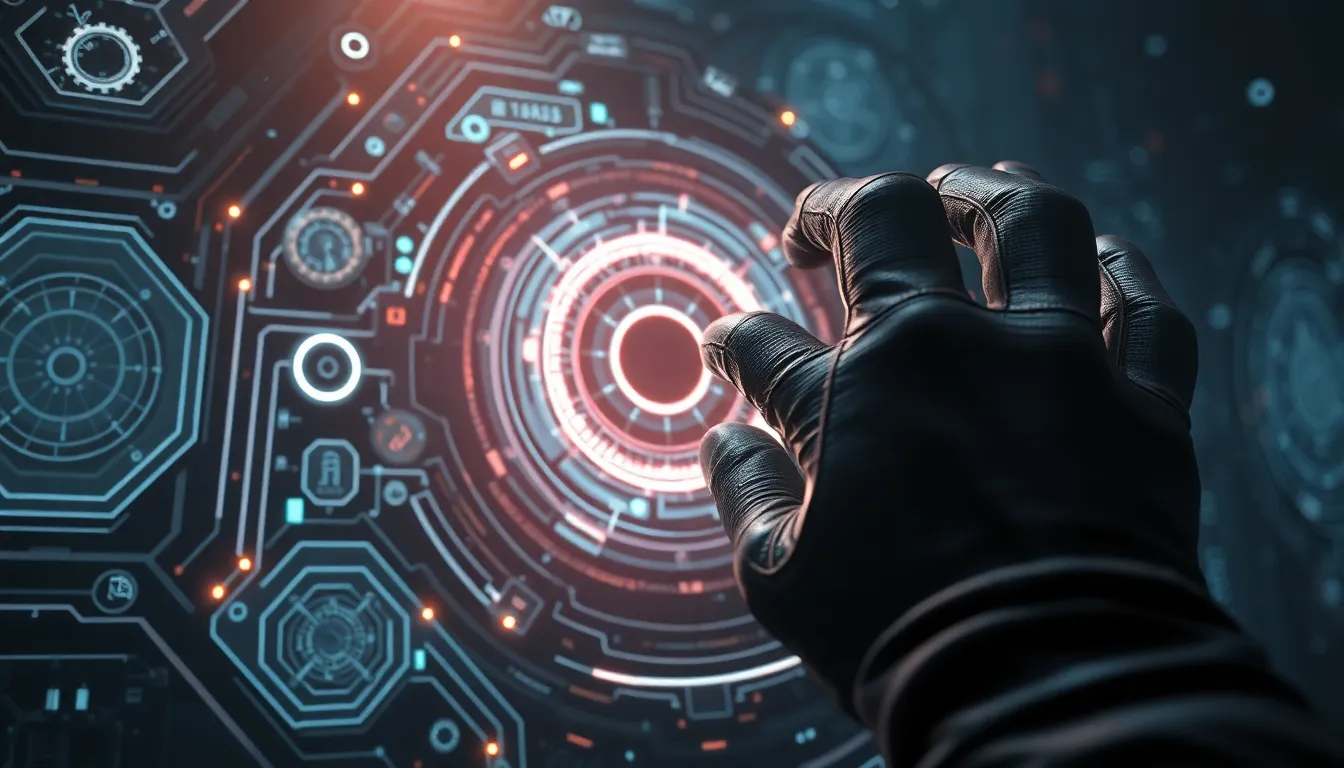
You know, for a long time, we’ve been sort of stuck with screens. Flat, rectangular things. Sure, they got thinner, sharper, but it’s always been about looking at something. Holographic AI interfaces? That’s different. That’s about things coming out of the screen, or maybe just appearing in front of you, right there in your space. It’s not just fancy 3D, either. This is about interaction, about artificial intelligence making these projections smart, responsive, and truly part of your environment. Think about talking to a projected person who looks like they’re sitting in your living room, or manipulating a 3D model with your bare hands, no goggles needed. It’s a big shift, honestly, from passive viewing to active participation, and it’s going to redefine how we get things done, how we learn, how we connect. It feels a bit like science fiction, doesn’t it? But, believe it or not, the pieces are already starting to come together.
What Are Holographic AI Interfaces, Anyway?
So, let’s just get straight to it: what exactly are we talking about here? When I say “holographic AI interface,” I don’t mean those sort of optical illusions you might have seen at concerts, where a famous musician who’s, well, no longer with us, appears on stage. That’s usually a trick with reflections, often called Pepper’s Ghost. No, this is different. This involves actually creating light fields that scatter light as if an object is truly there in 3D space. And the “AI” part? That’s the brains, the smarts that make these light projections interactive. It’s not just a static image floating in the air; it’s something you can talk to, something that understands your gestures, something that reacts to your presence. It’s really the combination of advanced projection technologies – sometimes called holographic display tech – with sophisticated artificial intelligence models.
To begin experimenting with this idea, you don’t necessarily start with full-blown holograms. Sometimes, small wins come from exploring augmented reality (AR) tools first. Think about how AR apps place virtual objects into your real-world camera view. It’s a stepping stone. Common tools in serious development involve specialized light field projectors, spatial light modulators, and powerful AI rendering engines. What people sometimes get wrong is thinking it’s just a visual trick, like a super-realistic screen. But the goal here is true volumetric display, something you could theoretically walk around and see from all angles, and crucially, interact with using natural language or gestures. Where it gets tricky is achieving high resolution and a wide field of view without needing a dark room or special glasses. Imagine trying to make a solid-looking light appear in broad daylight – that’s a tough engineering challenge, to be fair.
The Real Challenge of Projection
Honestly, getting light to behave like a solid object is a deep dive into physics. We’re talking about controlling individual light rays to create a coherent 3D image. It’s one thing to project a 2D image onto a mist screen, which is cool for a concert, but another thing entirely to create a truly freestanding, touchable-looking image. This takes incredibly fast and precise manipulation of light. And then, layering the AI on top, so that projected ‘thing’ can understand you, well, that’s where the magic really starts to happen. So, yeah, it’s not just smoke and mirrors; it’s some serious optical engineering combined with machine learning.
Building Blocks: The Tech Behind the Magic
Okay, so how do we actually make these holographic AI interfaces happen? It’s less about one magic bullet and more about several complex technologies playing nicely together. At its core, you need really advanced optics. We’re not talking about your grandpa’s slide projector here. We’re talking about systems that can rapidly modulate light, creating what’s called a light field – basically, controlling the direction and intensity of every light ray to form a 3D image. Then you add layers of sensor tech. Think about depth-sensing cameras, similar to what you might find in some smartphones or gaming consoles, but much more precise. These sensors track your hands, your eyes, your body movements, telling the AI where you are and what you’re trying to do. This input is absolutely critical for truly interactive experiences.
AI Algorithms Making it Smart
And of course, the big player, the AI. This is where the “smart” part of holographic AI interfaces truly comes alive. AI algorithms are crucial for several reasons. First, they process all that sensor data in real-time, interpreting your gestures, understanding your voice commands, and even trying to predict your intentions. Second, AI handles the real-time rendering of the holographic image itself. It needs to adjust the 3D projection instantly based on your perspective and interaction. If you walk around a projected object, the AI needs to dynamically render the correct view. This takes immense computational power and incredibly efficient algorithms. What people often get wrong is underestimating the sheer processing power needed for this; it’s not just displaying a pre-rendered video. The AI has to be constantly creating and adapting the visual and interactive elements. A key area here is *AI-powered holography* for spatial computing.
One of the trickiest parts? Latency. If there’s even a slight delay between your movement and the holographic object’s reaction, the whole illusion breaks. So, the AI models have to be lightning-fast. Building momentum here means starting with simpler AI models for basic gesture recognition and gradually adding complexity, like natural language processing. Common tools for developers often include robust graphics processing units (GPUs), specialized AI frameworks for real-time inference, and advanced optical simulation software. Small wins often come from perfecting one specific interaction, like accurately tracking a hand movement to manipulate a virtual dial, before trying to build an entire interactive environment.
Everyday Life with Holographic AI – Where We’re Headed
So, where does all this tech take us? What does everyday life even look like with holographic AI interfaces? Honestly, the possibilities are wild, almost hard to wrap your head around. Imagine a future where your smart home assistant isn’t just a speaker, but a small, friendly hologram that appears on your kitchen counter, answering questions, showing you weather patterns in 3D, or even projecting a recipe directly onto your workspace. In education, medical students could interact with incredibly detailed, floating anatomical models, dissecting them with virtual tools without ever needing a scalpel. Architects could literally walk through their building designs, seeing them as 3D structures in their office, making real-time changes with a wave of a hand. This is the promise of virtual interaction future.
Think about meetings. Instead of staring at faces on a screen, you could have holographic representations of your colleagues appear around a virtual table in your living room, complete with spatial audio. It would feel much more like being together, right? But to be fair, there are real challenges here. Cost is a big one. Making this tech affordable for everyone will take time. Public acceptance is another; some people might find floating images intrusive or just plain weird at first. And then there are privacy concerns – if sensors are tracking your every move to facilitate interaction, where does that data go? That’s something we, as a society, will absolutely have to figure out.
Small wins in this space might involve specialized applications in controlled environments first. Think about museums using limited holographic displays for interactive exhibits or designers using them for specific product visualization. Where it gets tricky is making these interfaces intuitive enough for grandma and grandpa to use without a steep learning curve. The goal isn’t just to make cool tech; it’s to make truly useful, accessible tech. Common tools in these early applications are often custom-built projection systems and bespoke AI models trained for very specific tasks, often within closed professional networks before hitting wider consumer markets.
The Road Ahead: Hurdles, Hopes, and Honest Thoughts
Okay, so we’ve talked about what holographic AI interfaces are and where they might take us. But let’s be real – this isn’t going to happen overnight. There are some serious hurdles to jump over. For starters, power consumption is a big deal. Creating truly volumetric, bright, and stable holograms takes a lot of energy. Then there’s the resolution and field of view. We want these things to look as real as possible, sharp and clear, whether we’re looking straight at them or from the corner of our eye. And making them visible in a brightly lit room without special screens or fog? That’s, honestly, a holy grail in optical science.
A lot of research is happening in material science, trying to find new ways to manipulate light, and in advanced AI models that can render complex 3D environments with minimal processing power and latency. Think about AI that can predict what you’re going to do next, almost like a sixth sense, to make interactions even smoother. What people sometimes get wrong is expecting Star Wars-level holograms tomorrow. It’s a gradual process. Each small breakthrough in optics, each tiny improvement in AI efficiency, gets us a little closer. The path to widespread holographic interface development is paved with countless little experiments and iterations.
Common tools for researchers in this field include custom-built optical labs with incredibly precise lasers and mirrors, high-performance computing clusters for training large AI models, and specialized software for simulating light propagation. Sometimes, small wins are just proving a concept in a laboratory setting, like generating a stable 3D image of a single pixel or figuring out how to reduce the computational load for a specific rendering task by just a few milliseconds. It’s gritty, fundamental science and engineering work. To be honest, sometimes it feels like two steps forward, one step back, but the potential is so massive that it keeps everyone pushing.
FAQs About Holographic AI Interfaces
How do holographic AI interfaces differ from current AR/VR experiences?
Holographic AI interfaces are generally designed to project three-dimensional images directly into your physical space, allowing you to see and interact with them without needing special glasses or a headset. AR (Augmented Reality) typically overlays digital information onto your view of the real world, usually through a phone screen or glasses, while VR (Virtual Reality) completely immerses you in a digital environment, requiring a headset that blocks out the real world. The key distinction for holography is the freedom from headwear and the natural integration into your immediate surroundings, making virtual objects truly appear to exist in your room.
What kind of AI is used to make holograms interactive?
Various AI models come into play for interactive holograms. Machine learning algorithms are used for gesture recognition, interpreting hand movements and body language to control holographic objects. Natural language processing (NLP) allows the interface to understand spoken commands and engage in conversations. Computer vision AI tracks your gaze and position, ensuring the hologram is rendered correctly from your perspective. Additionally, generative AI might be used to create or modify holographic content in real-time, adapting it to user input or environmental changes, making the interactions feel more dynamic and personalized.
Is it possible to build a basic holographic display at home?
While you can’t really build a true volumetric holographic AI interface at home with consumer electronics, you can create basic optical illusions that *look* like holograms using readily available materials. For example, a “pyramid hologram” for smartphones uses a simple plastic pyramid to reflect a specially formatted video playing on your phone screen, making it appear as a 3D image. These are fun projects and demonstrate the visual effect, but they lack the true volumetric nature, interactivity, and AI intelligence of the advanced interfaces being developed.
What are some industries that will first adopt holographic AI interfaces?
Early adoption of holographic AI interfaces will likely occur in sectors where visualizing complex 3D data and collaborative interaction are critical. Medicine, for instance, could use them for surgical planning or educational anatomy models. Engineering and architecture firms might use them for design visualization and rapid prototyping. Retail could use holographic displays for interactive product showcases. Also, specialized training simulations, especially for fields like aviation or defense, could greatly benefit from realistic, interactive 3D projections, improving engagement and learning outcomes significantly.
How will holographic AI interfaces change how we work and learn?
Holographic AI interfaces are expected to transform work and learning by making digital information more tangible and intuitive. In work, they could enable truly collaborative remote meetings with realistic participant projections, or allow professionals to manipulate complex data models in 3D space, leading to faster insights and innovation. For learning, students could interact with historical figures, explore planets, or dissect virtual organisms, moving beyond static textbooks or flat screens. This shift from two-dimensional to three-dimensional, interactive engagement could deepen understanding, improve retention, and make education far more engaging and experiential.
Conclusion
So, we’ve taken a bit of a wander through the idea of holographic AI interfaces. Honestly, it’s a future that sounds almost too good to be true, doesn’t it? But the bits and pieces of the technology – the advanced optics, the smarter AI, the faster processors – they’re all coming along. It’s not just a fancy display; it’s about interacting with information and other people in a completely new way, making the digital world feel a lot more real, a lot more present. What’s worth remembering here, I think, is that this isn’t just about entertainment, though that will certainly be a part of it. It’s about making complex tasks easier, communication richer, and learning more immersive. It’s a genuine step towards a more natural, intuitive relationship with our technology.
My honest thought? The “learned the hard way” comment I’d give anyone looking at this tech is that the real breakthroughs aren’t always in the flashy, big-budget demos. Often, they’re in the incredibly tedious, fundamental research into materials or algorithms that might not look exciting on day one. It’s about a million small, incremental steps that, over time, build into something truly transformative. We shouldn’t expect an instant Star Wars moment; it’s a gradual evolution. But the trajectory is clear: our virtual interactions are becoming increasingly physical, and that, to me, is pretty darn exciting.